COMMUNITY RESEARCH / SERVICE SYSTEM / DIGITAL PLATFORM
Everyone’s Community
Community activities,
as a starting point for connection.
A comparative study of three Shanghai communities, leading to smaller, more frequent and accessible activities for all ages—and a platform for organisers to learn from one another.
01CONTEXT
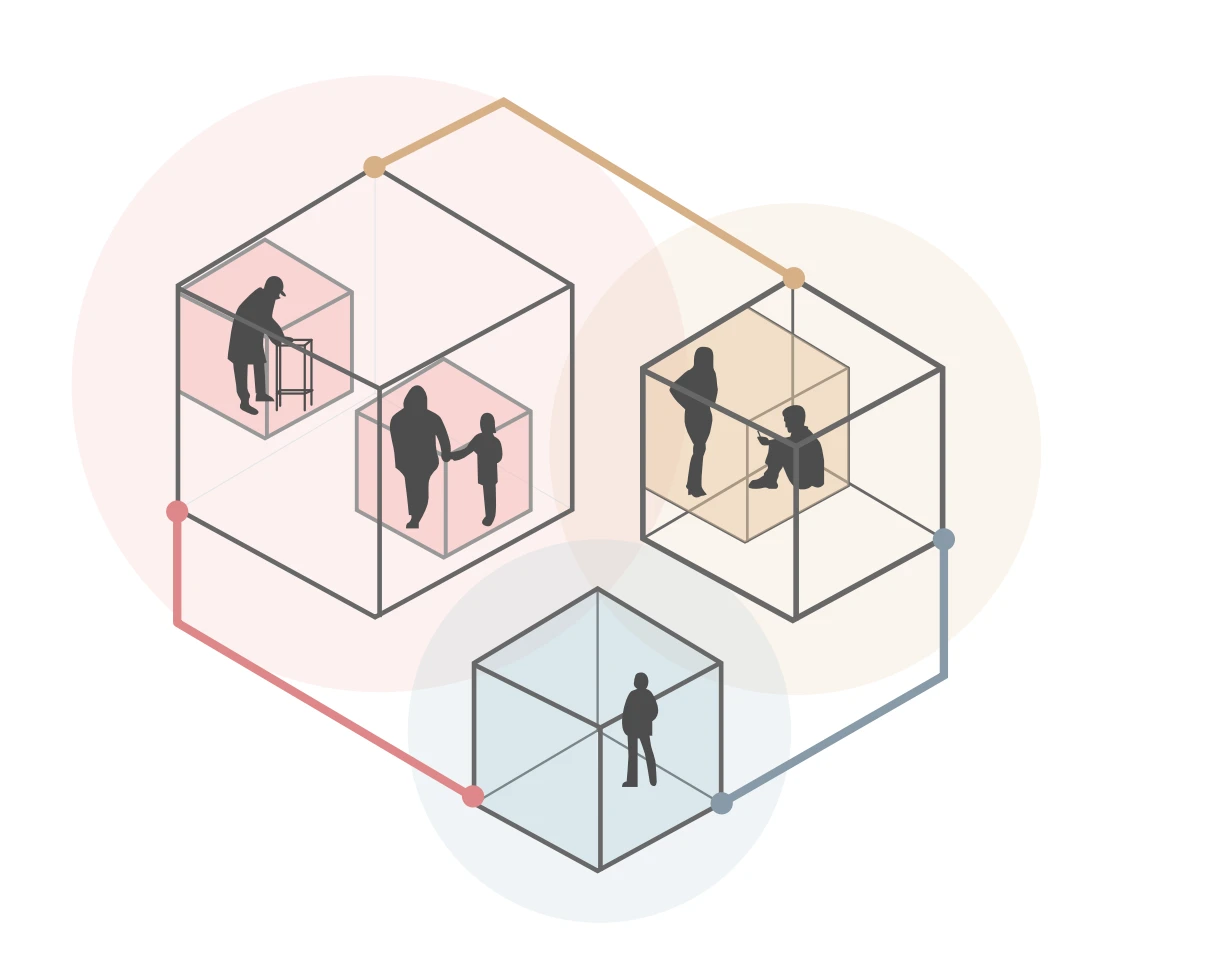
An activity or a space does not automatically create connection.
Neighbours may use different spaces, follow different schedules and hear about activities through different channels. Gaps in connection can emerge from these everyday differences.
Understand three layers of relationships.
The project examines relationships between communities and residents, between social groups, and within families. Interviews raised issues around access to information, incompatible schedules and limited personal space at home.
How might residents of different ages meet more easily and build relationships through shared participation?
02COMPARATIVE RESEARCH
Compare different neighbourhoods through one framework.
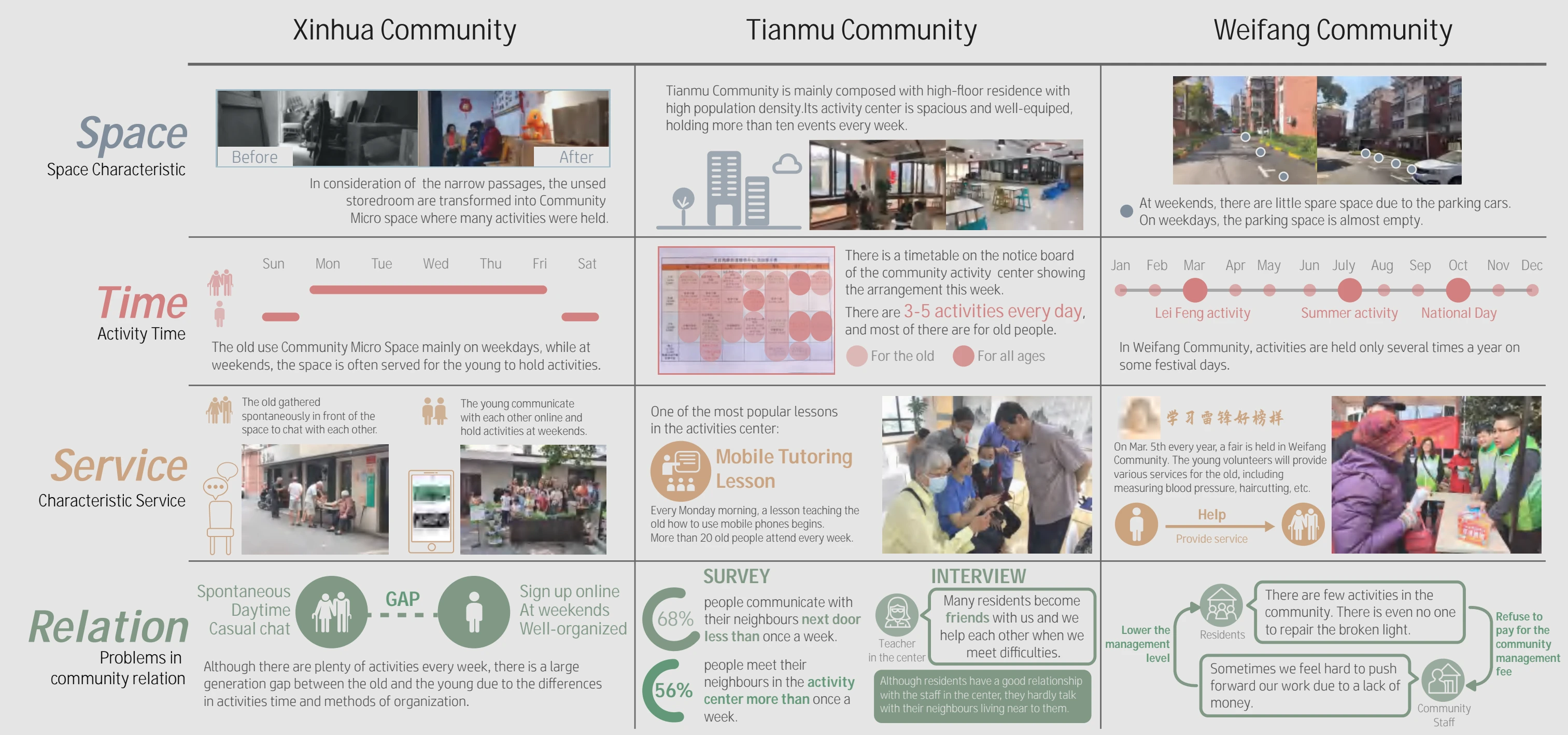
Inspired by AEIOU observation, I developed an STSR framework: space and time describe the conditions for activities; service and relation explain participation and connection.
- SpaceWhere spaces are and how they are used
- TimeActivity frequency and participation times
- ServiceWho organises services and how
- RelationRelations between residents, staff and organisations
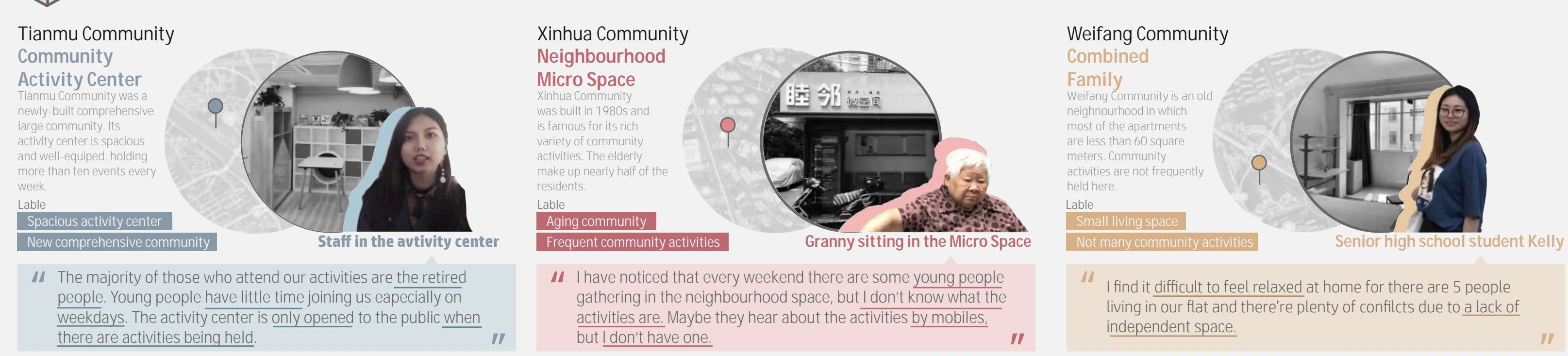
Xinhua
StrengthsAdaptable micro-spaces and good relationships with community staff.
Connection gapDifferent schedules and ways of organising limit contact across generations.
Tianmu
StrengthsA well-equipped centre with frequent, regular activities.
Connection gapFrequent participation does not necessarily translate into everyday neighbour relationships.
Weifang
StrengthsIntergenerational volunteering and spaces available at different times.
Connection gapInfrequent activities and friction between residents and community staff.
Findings describe the research settings at the time. Original survey figures remain in the source image, but are not generalised here because the available material does not specify sample sizes.
03DESIGN PRINCIPLES
Change how people meet, not simply add a larger event.
Each community had strengths and gaps. I translated opportunities to learn from one another into four principles for activities closer to everyday life.
- More frequentMove from occasional festivals toward recurring participation.
- Smaller groupsCreate room to get to know one another and work together.
- Closer to homeUse nearby micro-spaces to make attendance more accessible.
- Across agesCombine communication channels and create opportunities across generations.
Shift from activities delivered to residents toward participation shared by residents, staff and social organisations.
04SERVICE EXPERIENCE
Make the service tangible through gardening together.
Gardening Together is the proposal’s example scenario. From discovery and registration to introductions, shared work and feedback, it connects the resident experience with organising responsibilities.
- 01
Before: make the invitation accessible
Use online posts and physical notices, with both digital and paper registration for residents who do not use smartphones.
- 02
During: work together across ages
Introduce groups, explore the neighbourhood and garden together. Staff participate too, beyond a purely administrative role.
- 03
After: learn for the next activity
Collect digital and paper feedback, record the process and missing support, then develop improvements and shareable experience.
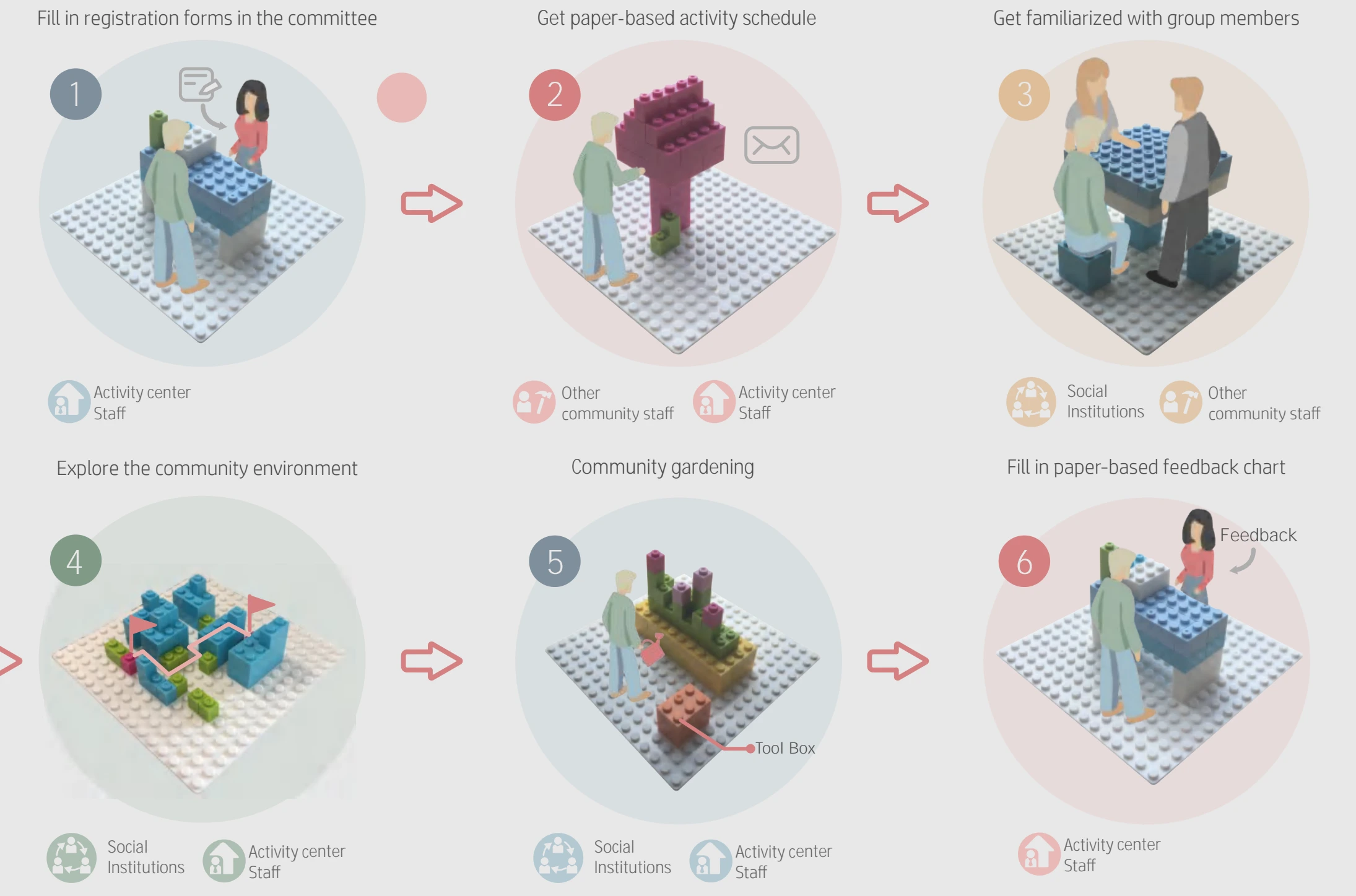
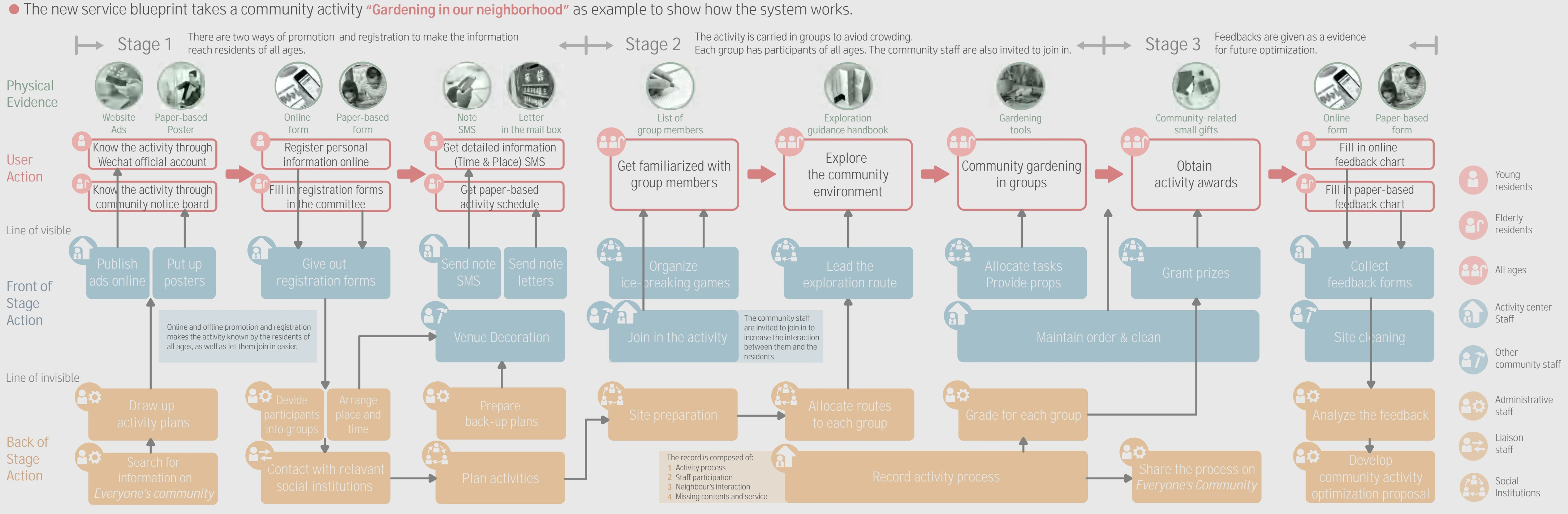
The storyboard and blueprint depict the proposed service, not a record of a delivered community activity.
05SERVICE SYSTEM
Make each participant’s place in the service clear.
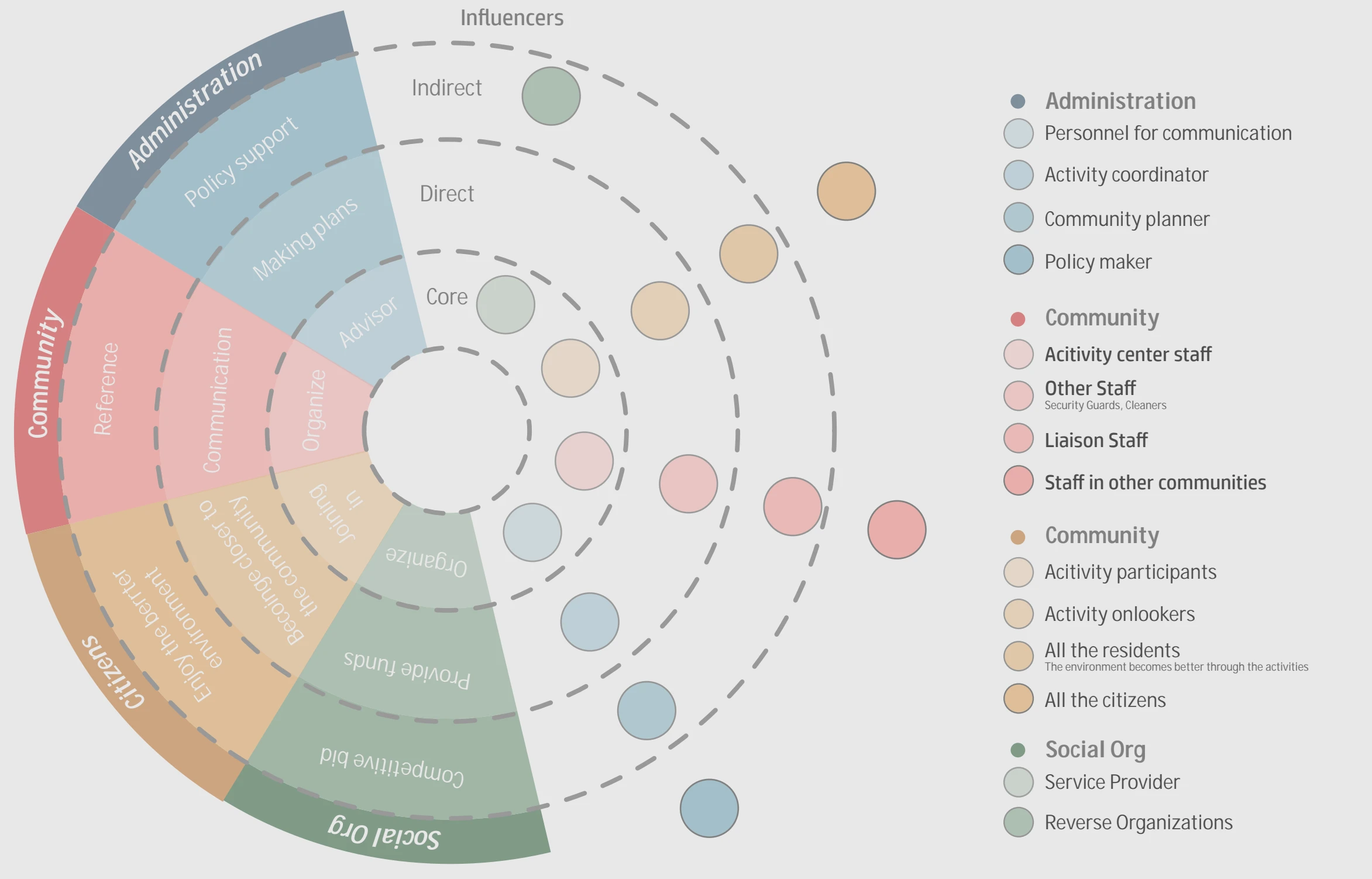
Residents, community staff, social organisations and administration contribute different resources. The system map traces information, money, materials and services; the stakeholder map distinguishes direct participation from wider influence.
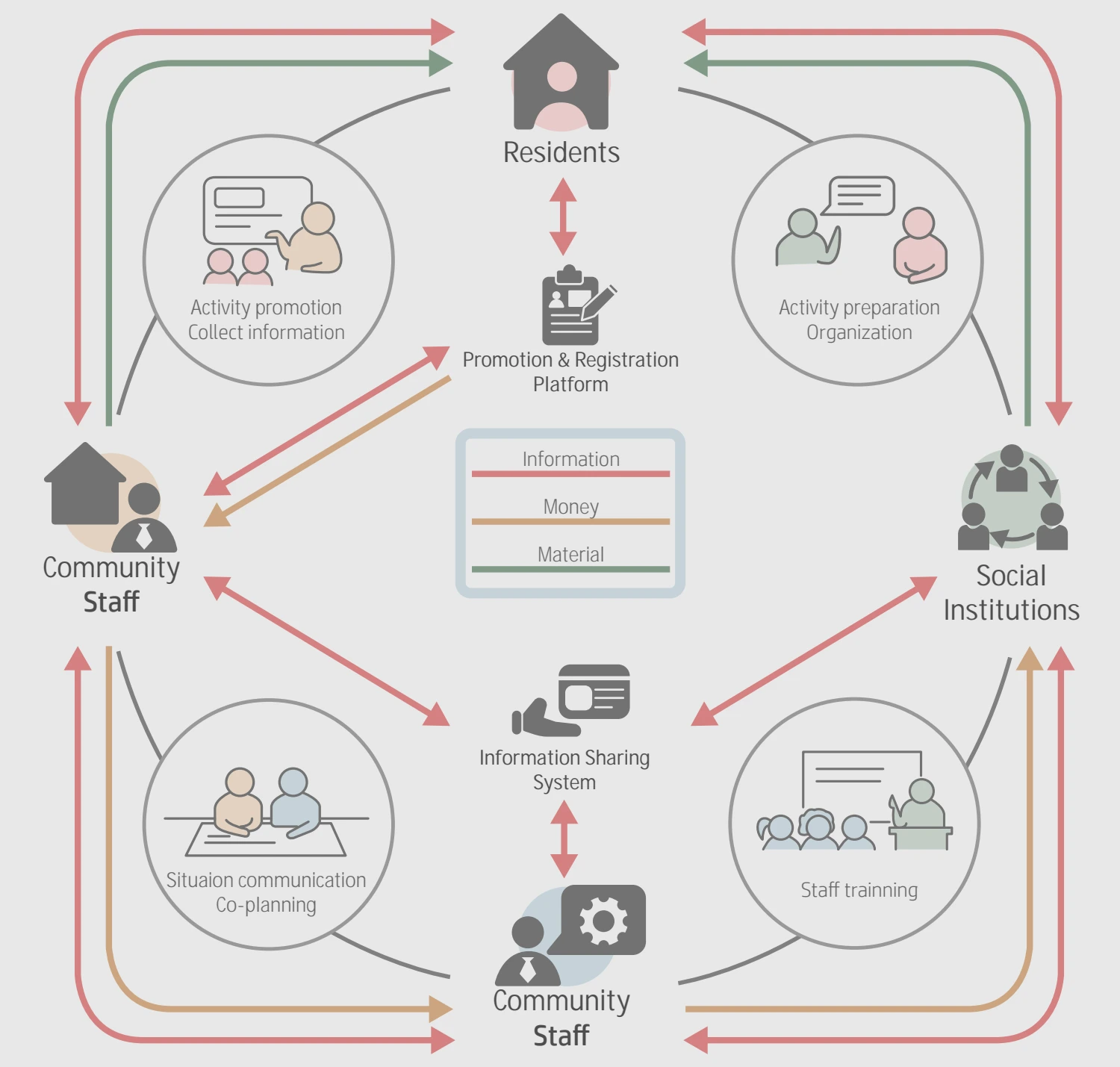
One shared activity depends on several kinds of work.
Community staff reach residents, collect needs and coordinate spaces. Social organisations support planning, delivery and training. Administrative roles provide resources and policy support. The platform connects recruitment and knowledge sharing without replacing offline relationships.
Learning can travel between communities.
Documenting activities and feedback lets other communities understand methods and resource needs, then adapt them to their own residents and spaces.
06DIGITAL PLATFORM
Turn one activity’s experience into the next one’s starting point.
The platform is designed for community planners and activity organisers, helping them search examples, share practice and find ideas for their next activity.
The platform supports organisers; activities connect residents.
The interface centres on discovering activities, sharing experience and getting started. Its purpose is to reduce repeated planning effort; resident connections still happen through shared activities in neighbourhood spaces.
- 01
Search and learn
Explore activity examples and their contexts.
- 02
Plan and organise
Adapt an activity to local needs and resources.
- 03
Document and share
Turn the process and feedback into knowledge others can use.
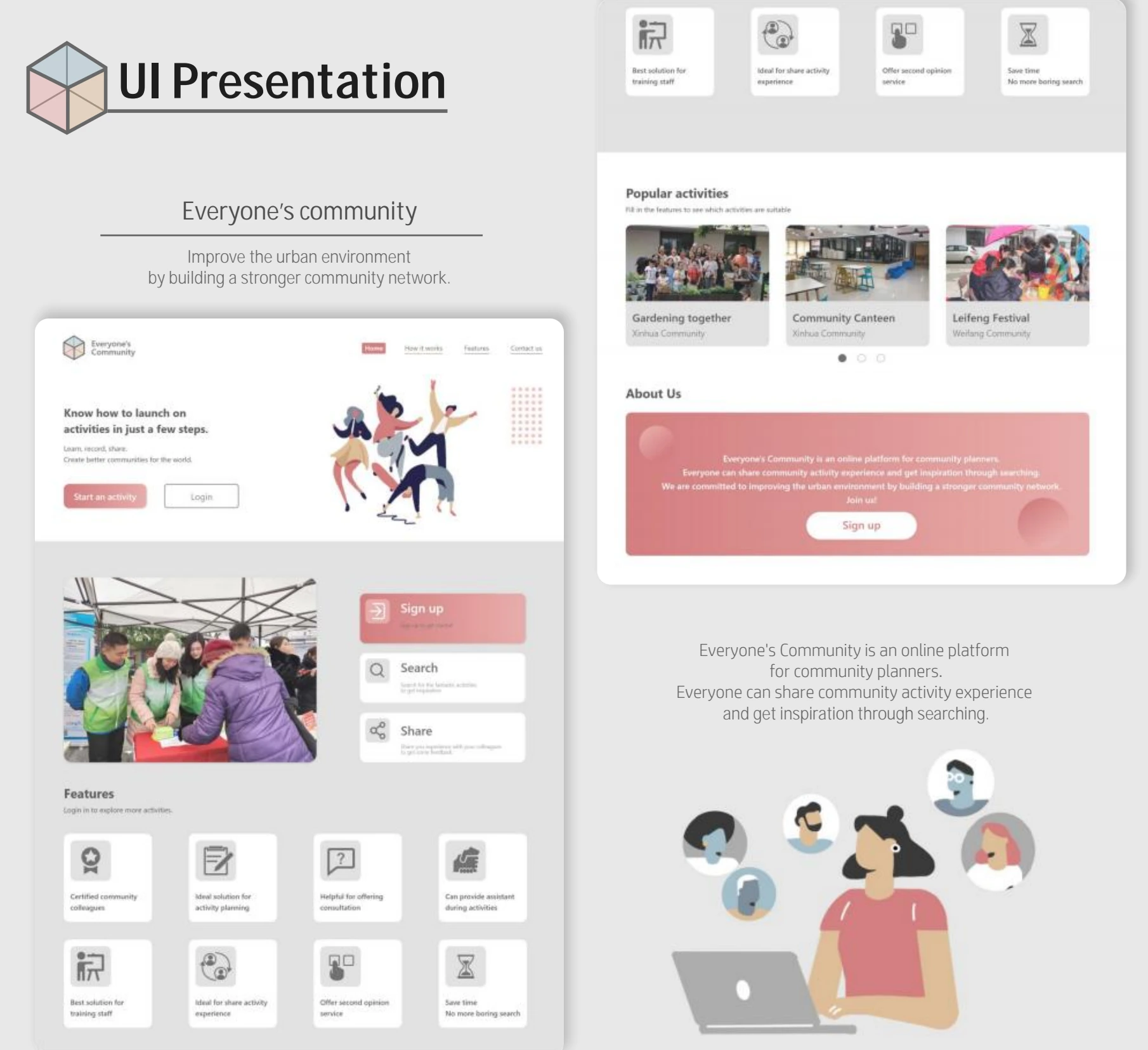
From questions of space to relationships and collaboration.
This independent project brought space, time, services and relationships into one view. The deliverable includes an activity model, blueprint and collaboration structure—not only screens. My later ALATE project continued this research with older residents in Weifang.
Stage: service proposal, UI design and a partial interactive prototype; no user testing conducted. Visuals retain their original portfolio language.
DESIGN PORTFOLIO
More design explorations in the complete portfolio.