01 / USER RESEARCH · SERVICE & PRODUCT DESIGN
Co-Joy
Making community co-creation
easier to join—and sustain.
A product-service system connecting residents, apartment operators and creative communities—turning everyday ideas into proposals people can develop together.
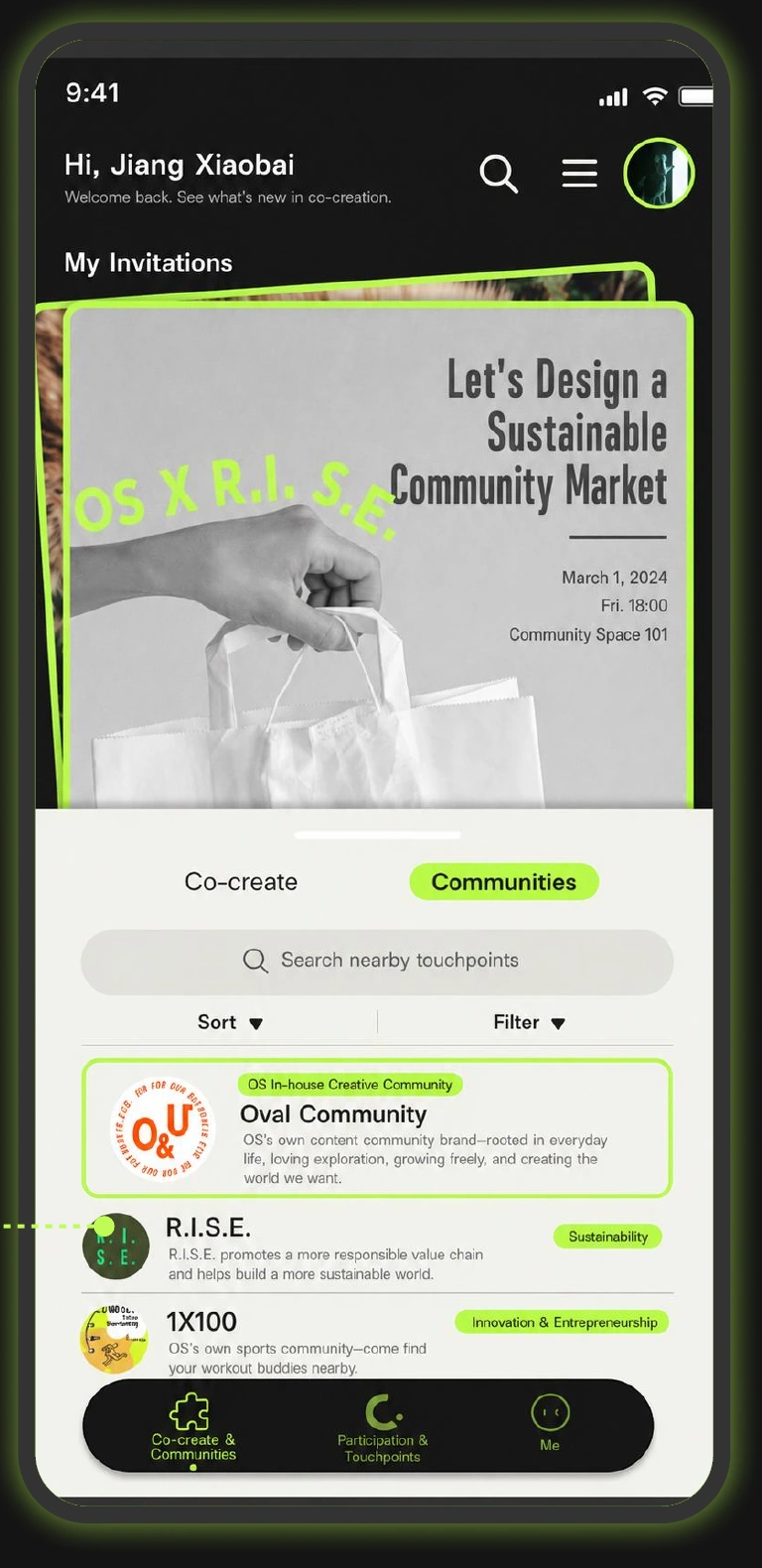
AT A GLANCE
- Challenge
- Communities want to collaborate, but participation and follow-up are difficult to sustain.
- My contribution
- Independent research, service-system development and product interface design.
- Deliverables
- A community-building and engagement proposal with a completed demo / prototype.
- Validation & results
- Usability testing with 6 participants and review by 3 experts informed iterations. A thesis prototype, not a live service.
01CONTEXT
The challenge was not more events. It was a way to keep collaborating.
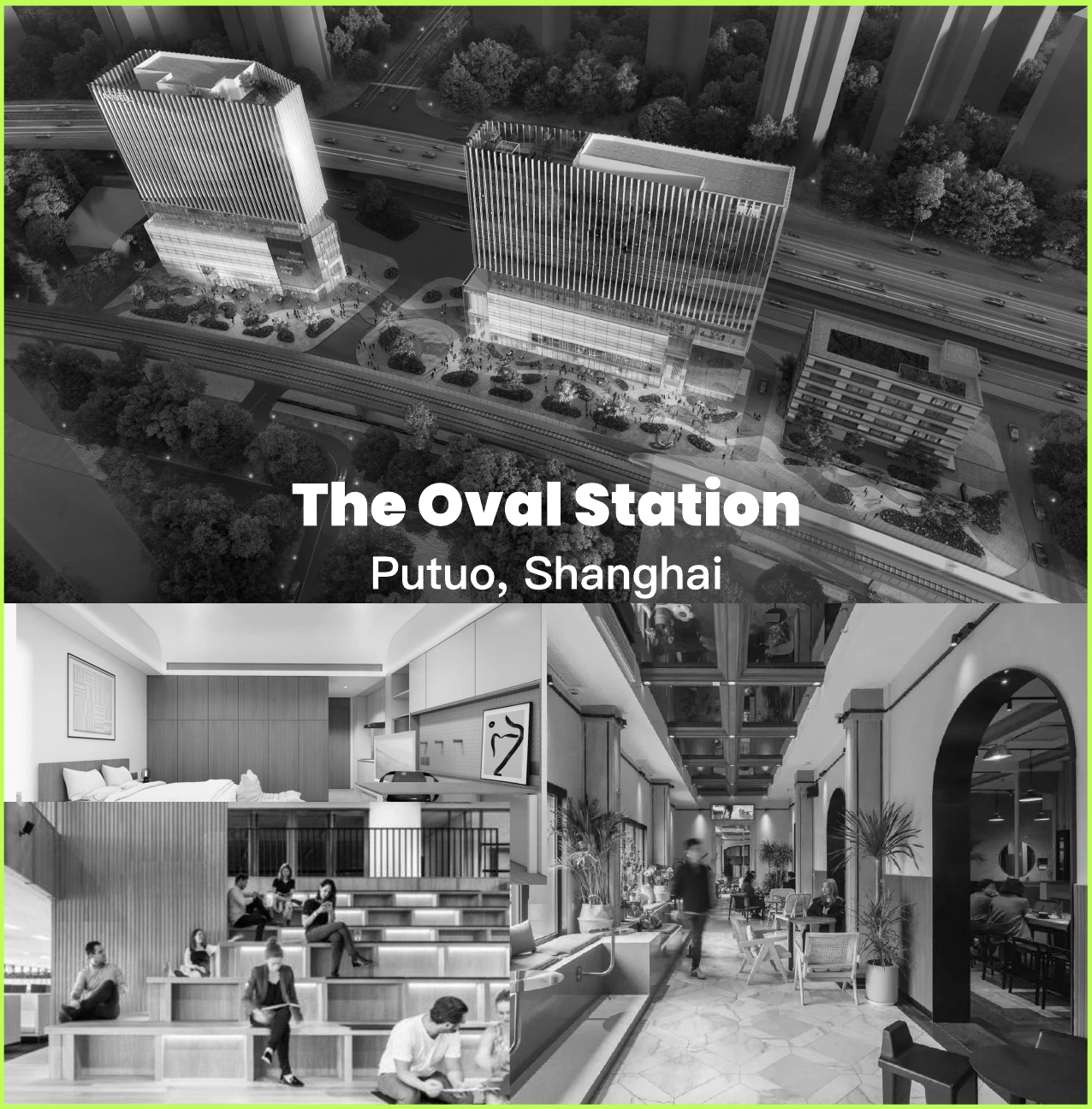
Youth apartments look to communities to enrich everyday life; creative groups need space, participants and opportunities. Both want to collaborate, yet relationships often end with a single event.
I studied The Oval Station, an apartment community already working with creative groups. The question shifted from designing a good event to supporting ongoing co-creation among residents, operators and those groups.
How might we lower participation barriers and connect scattered needs, resources and actions in a sustained co-creation process?
Residents
Have ideas, but not always the time or energy for intensive participation.
Need: easy participation, responses and visible contributions.Apartment operators
Must organize activities while coordinating resources and ongoing operations.
Need: clear processes, coordination tools and reusable learning.Creative communities
Bring expertise and energy, but may lack local knowledge.
Need: resource matching, resident insight and lasting partnerships.02RESEARCH & INSIGHTS
Understand the setting before defining the solution.
I combined literature, cases, observation and stakeholder interviews to understand why a shared desire to collaborate did not naturally lead to continuity.
- Case studies
- 6
- Expert interviews
- 2
- Observed co-creation workshop
- 1
- Semi-structured interviews
- 10
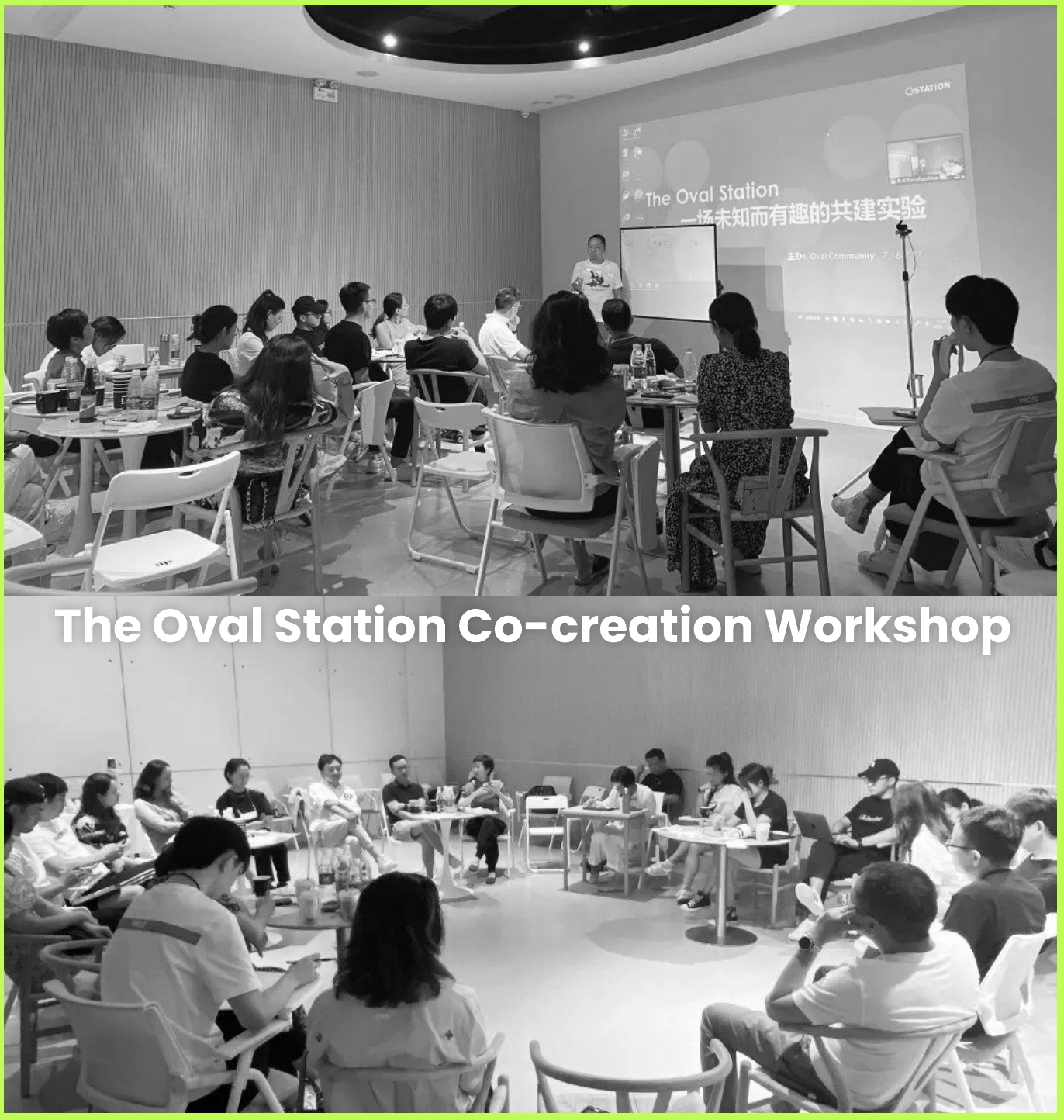
An open discussion is not automatically accessible to everyone.
The observed workshop had a clear structure, but resident participation was limited. Introductions took substantial time, and follow-up was unclear. An active event did not by itself mean meaningful, sustained participation.
Interview participants: 4 residents, 3 apartment operators and 3 creative-community members.
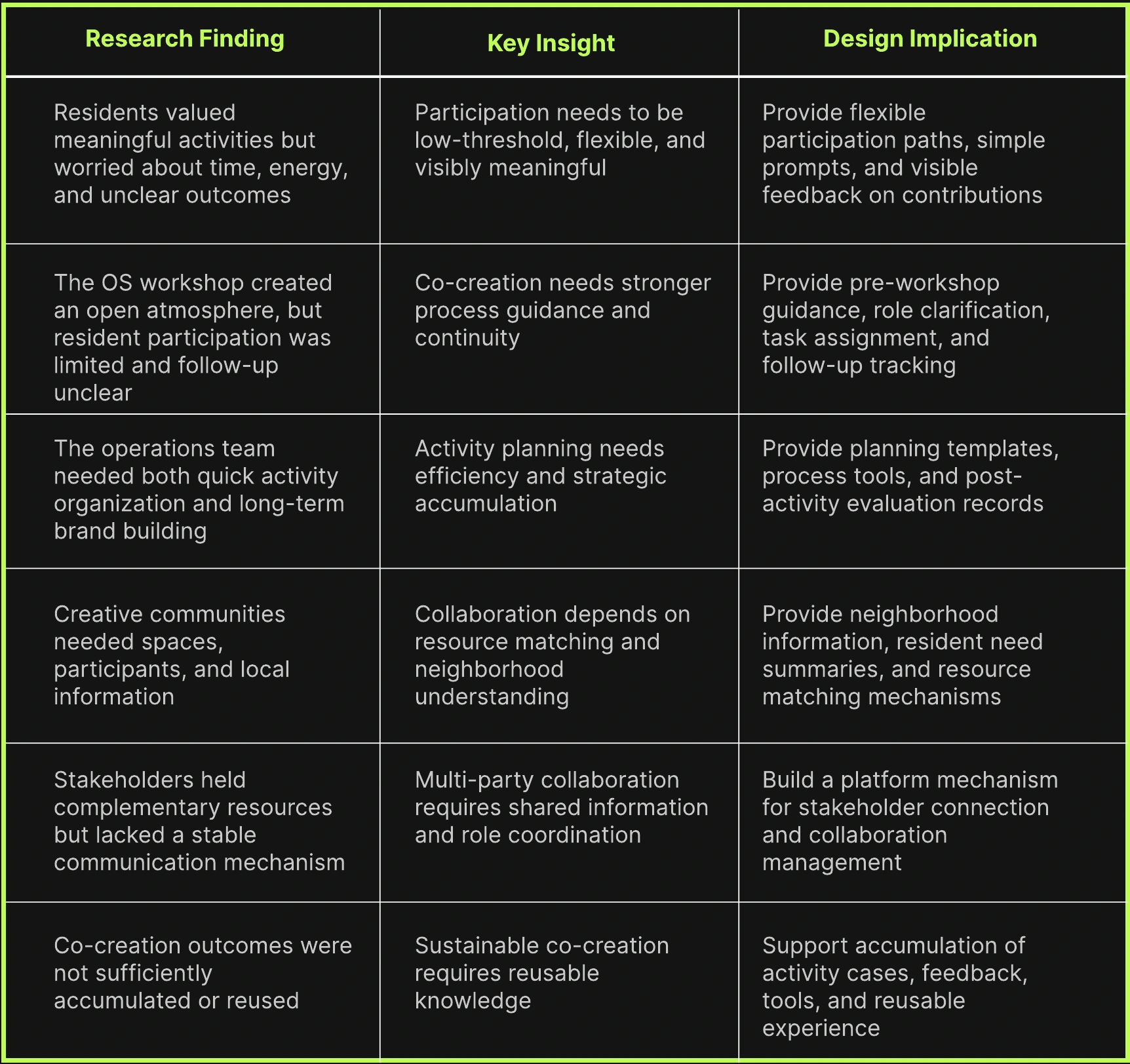
- Residents cared about time commitment and what happened to their ideas, not just how entertaining an activity was.
- Operators needed both efficient delivery and long-term learning for the community.
- Creative groups depended on local insight and resource matching, often scattered across people and chat groups.
FROM FINDINGS TO DESIGN DECISIONS
Every insight needed to change a design decision.
Limited time and energy
Offer lightweight expression alongside deeper co-design, instead of one demanding route.
Unclear follow-up
Connect ideas to discussion and outcomes, making each contribution visible.
Fragmented information
Connect resident needs, community profiles and projects beyond personal networks.
Every event starts from scratch
Keep process records, outcomes and feedback so future collaborations can build on them.
03CO-DESIGN
Bring the interpretation back to the people involved.
After research, I used scenarios and co-design tools with residents, operators and creative groups to translate findings into actionable directions.
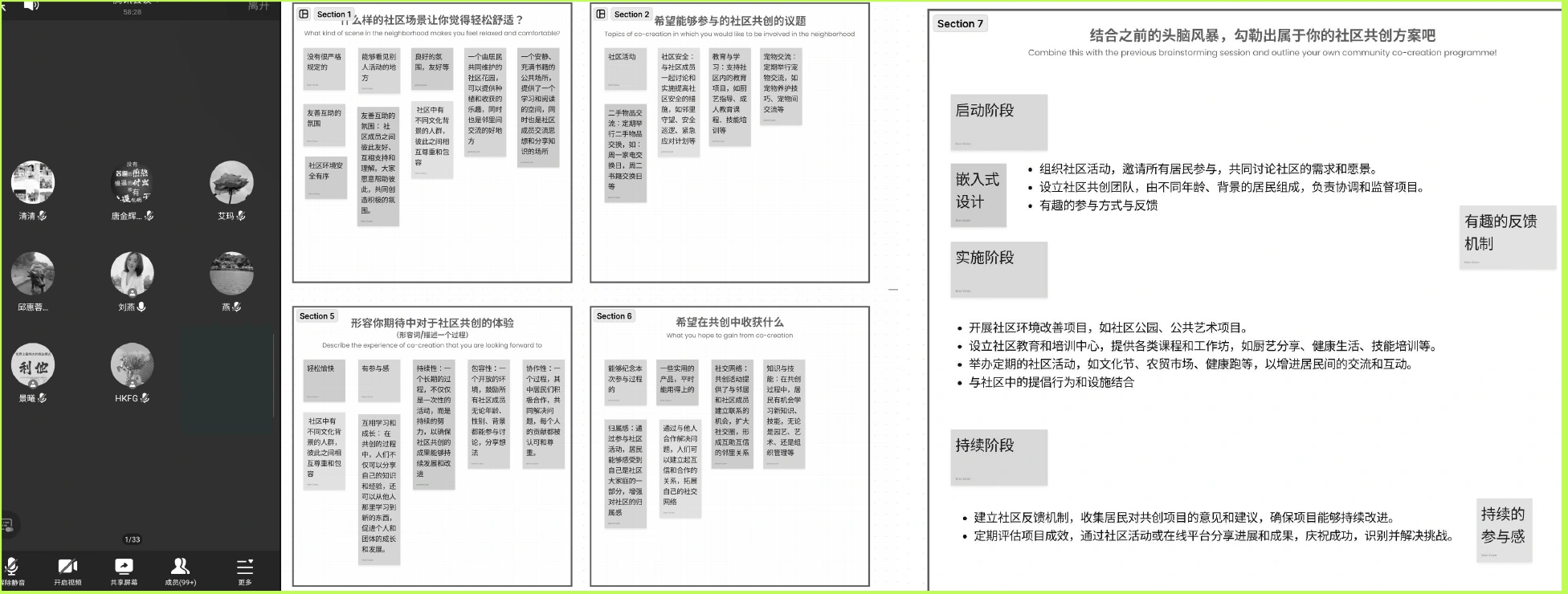
Residents: fit participation into everyday life
Participation did not have to mean a formal meeting. The workshop pointed toward everyday entry points, engaging feedback and a continuing sense of involvement.
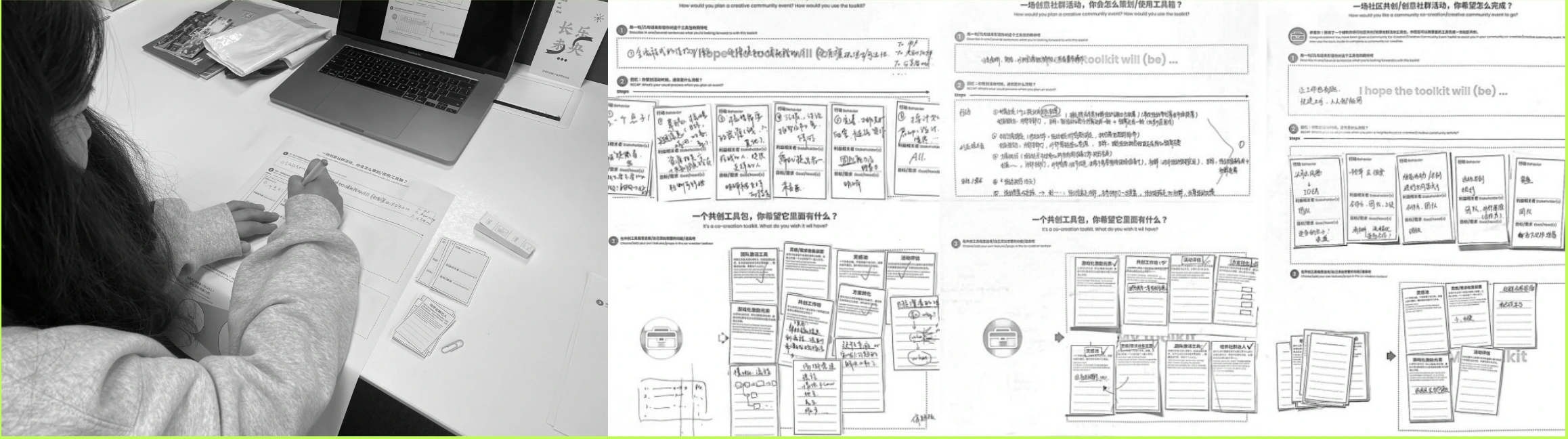
Partners: support beyond a single event
One-to-one co-design developed directions for inspiration collection, an online idea pool, long-term collaboration support and flexible spaces—supporting a continuing process rather than isolated features.
- Connect stakeholders
- Support participation
- Match resources
- Guide the process
- Retain learning
04SERVICE SYSTEM
Not just an app. A connected way to participate.
Treat the neighborhood as a co-creation field: spaces bring people together, physical touchpoints lower barriers, and a digital platform connects discussion, action and feedback.
- 01
Promotion
Encounter co-creation in daily life
- 02
Define
Collect ideas and frame shared topics
- 03
Co-design
Move from quick ideas to deeper collaboration
- 04
Practice & evaluate
See progress, outcomes and responses
- 05
Sustain communities
Keep relationships and learning for the next cycle
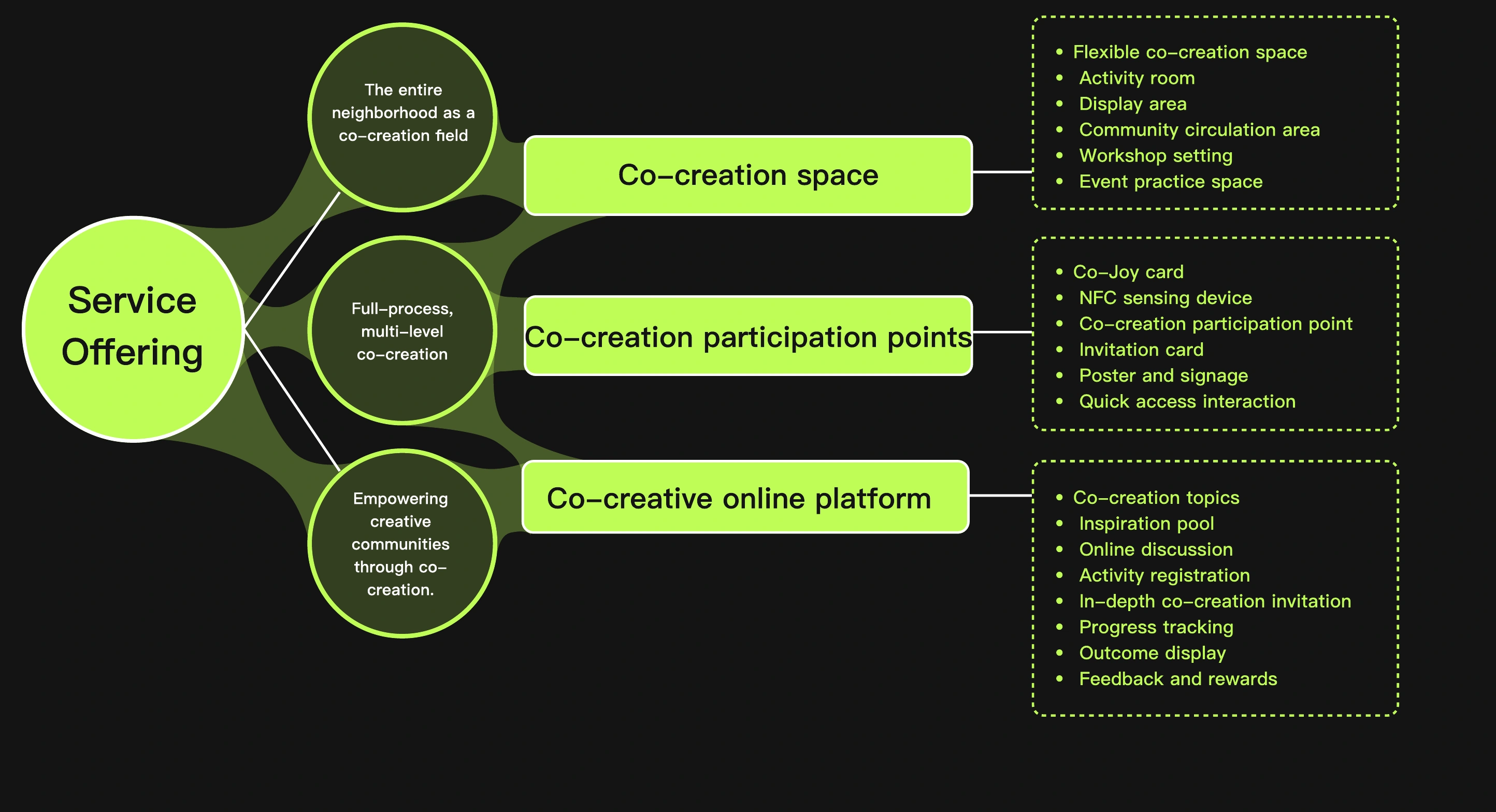
Co-creation spaces
Circulation areas, activity rooms and displays support different levels of involvement.
Participation touchpoints
Co-Joy cards, NFC devices, invitations and signage bring participation closer to residents.
Online platform
Ideas, discussions, registration, progress, outcomes and feedback connect the whole journey.
05FINAL DESIGN
How does a shared idea become a community experience?
A community sustainability market illustrates the full journey—from discovery and expression to co-design and feedback. These are design proposals and prototype screens, not a live deployed product.
Select any image to enlarge it and inspect the full design.
Passing by can be the beginning.
Place entry points along residents’ everyday routes. A Co-Joy card or phone NFC connects the physical device to a co-creation topic, supported by instructions and a touchpoint map.
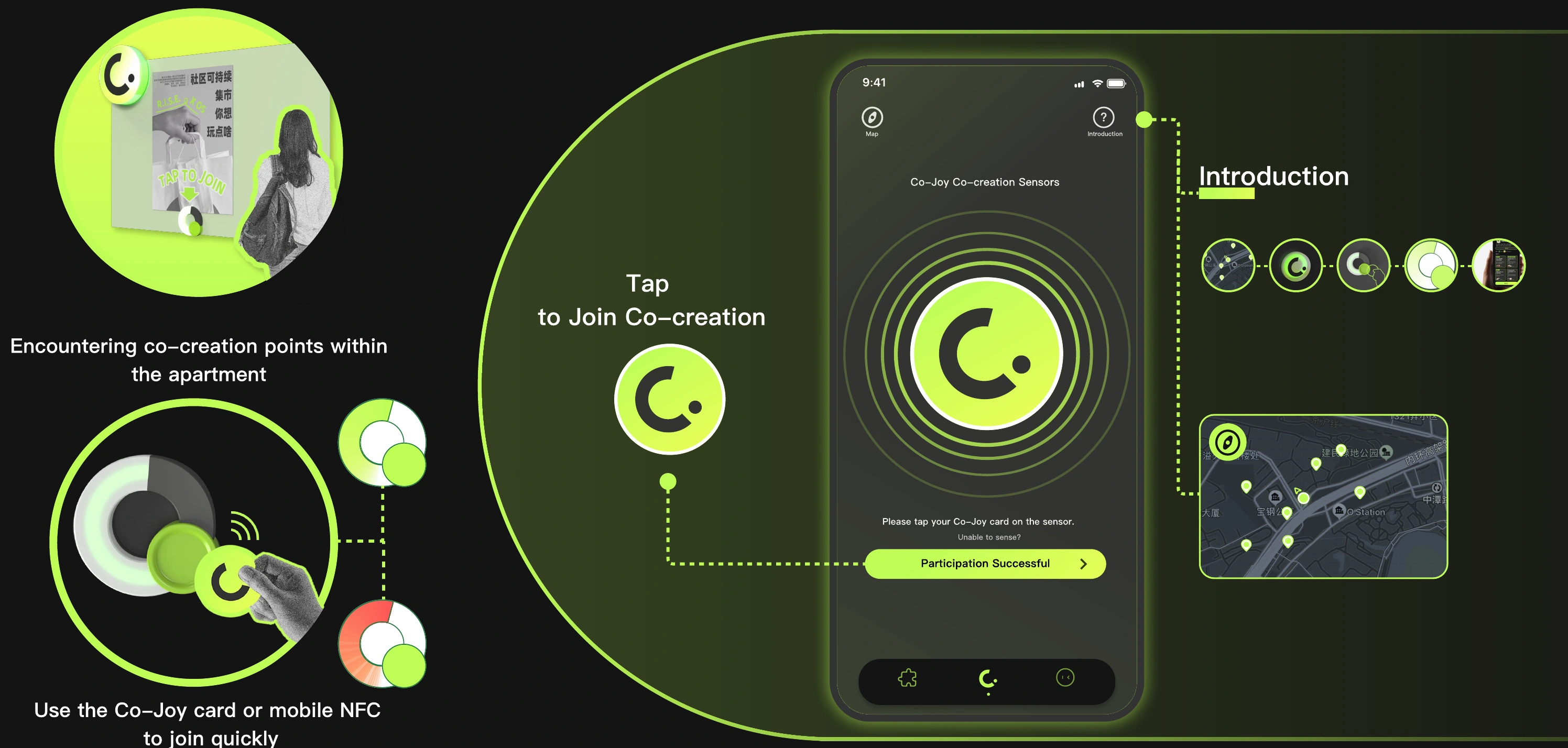
Make the first step easy before inviting deeper commitment. A workshop should not be the only way in.
Turn an everyday thought into an idea others can respond to.
The inspiration pool introduces a shared topic and lets residents contribute idea cards. Others can add to them, and organizers can respond—creating real input for the next co-design stage.
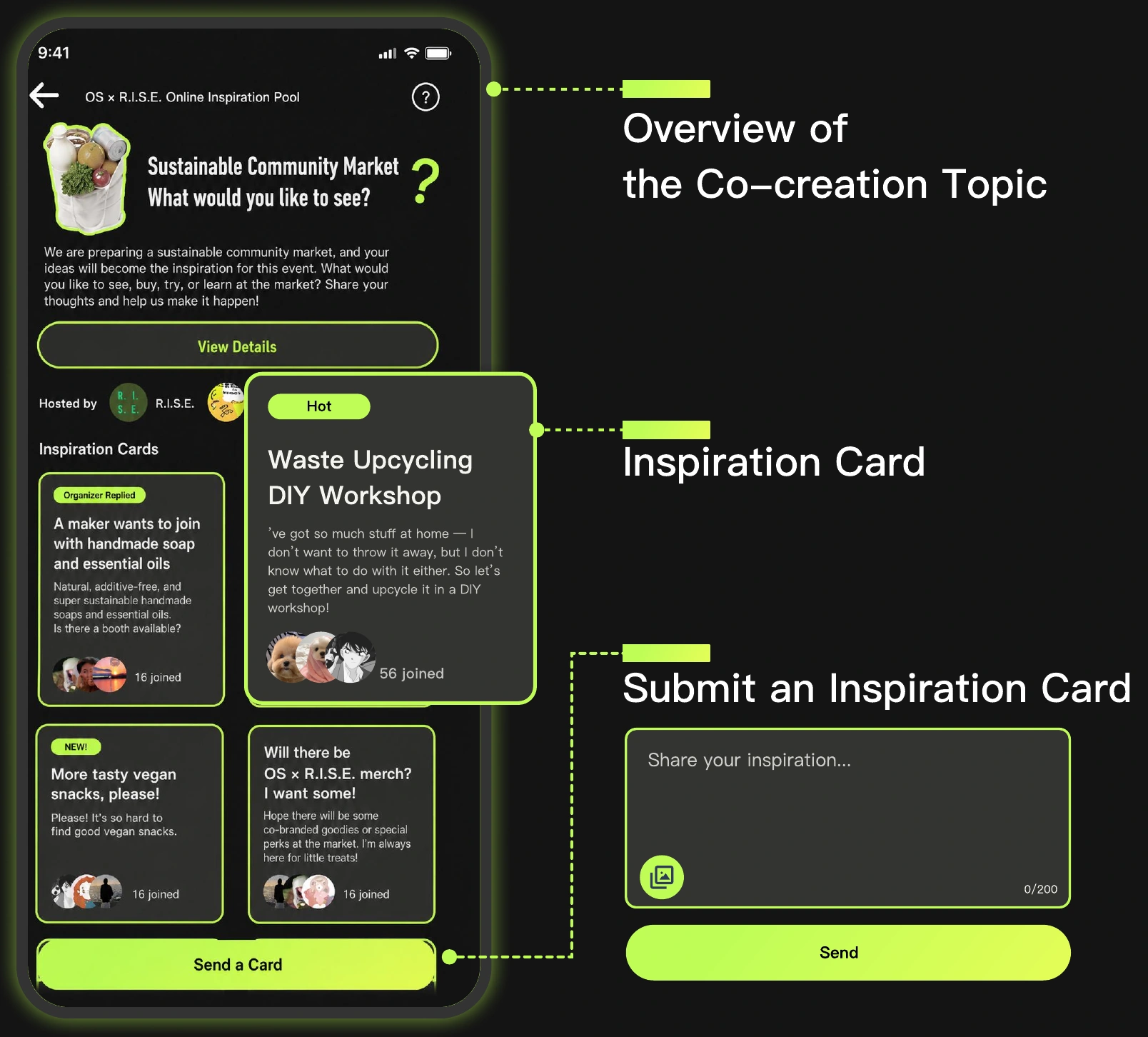
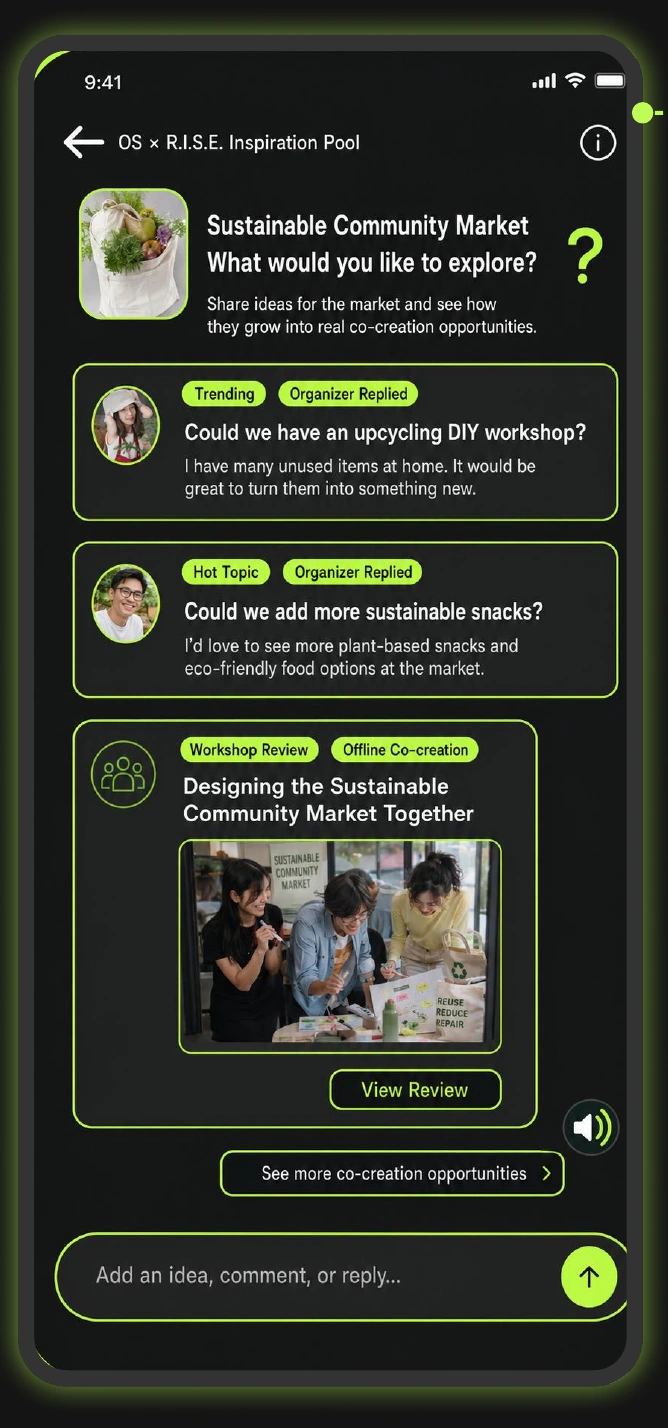
A card makes each contribution tangible. Visible discussion keeps ideas out of a closed collection form and lets people know they have been heard.
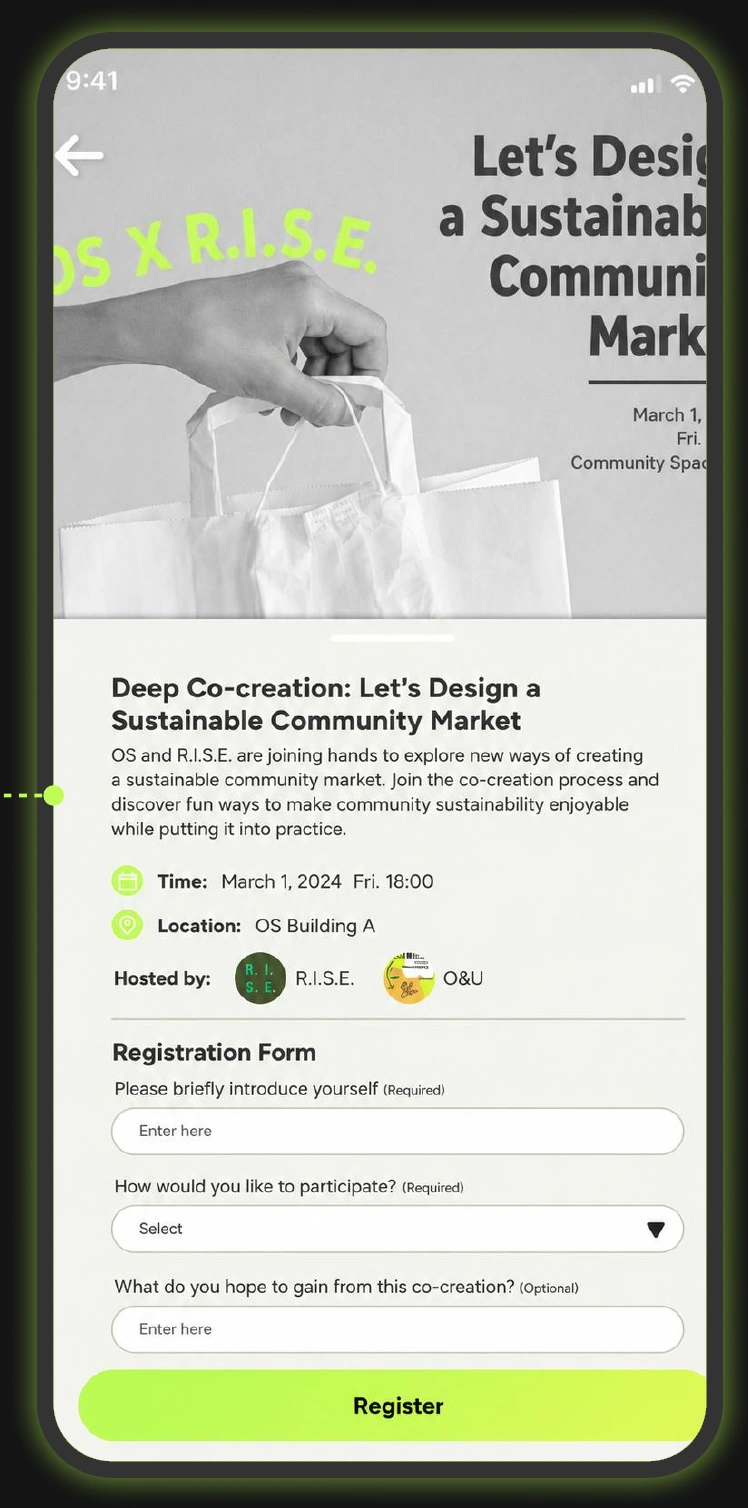
A clear invitation for people ready to go deeper.
An invitation connects lightweight input to deeper co-design. It explains the topic, time and place; registration captures participants’ roles and expectations. Online ideas become the starting point for an offline workshop.

DIFFERENT LEVELS OF INVOLVEMENT
Quick contributions and deeper involvement can coexist.
Some people contribute an idea, some join a workshop, and others help implement it. The system connects these levels of effort instead of serving only the most motivated few.
Show people what happened to their contribution.
Co-creation does not end at submission. A timeline connects stages; outcome pages show highlighted ideas, process records and proposals; feedback carries learning into the next cycle.
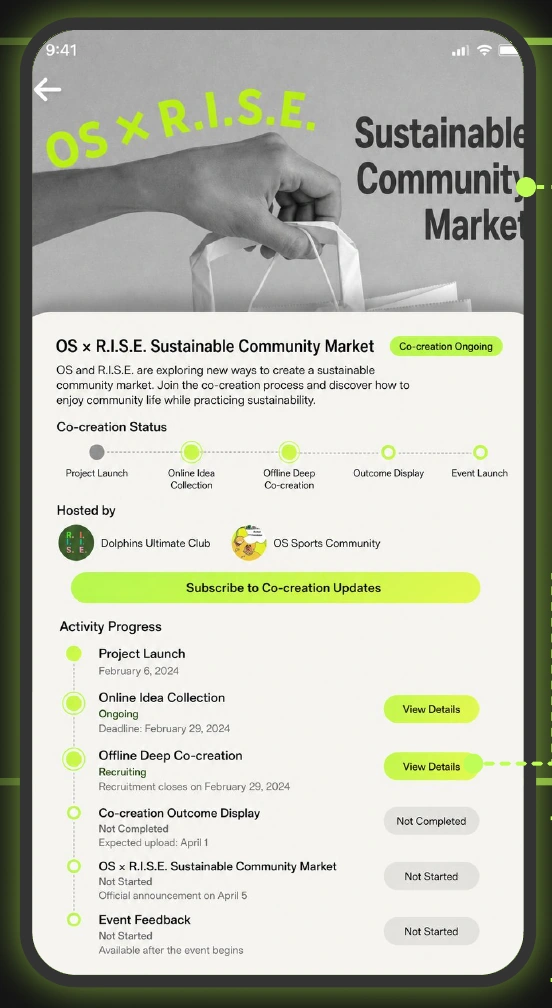
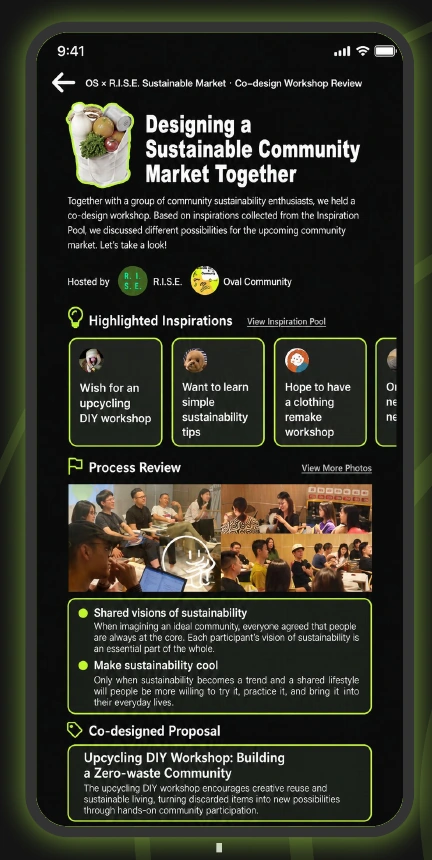
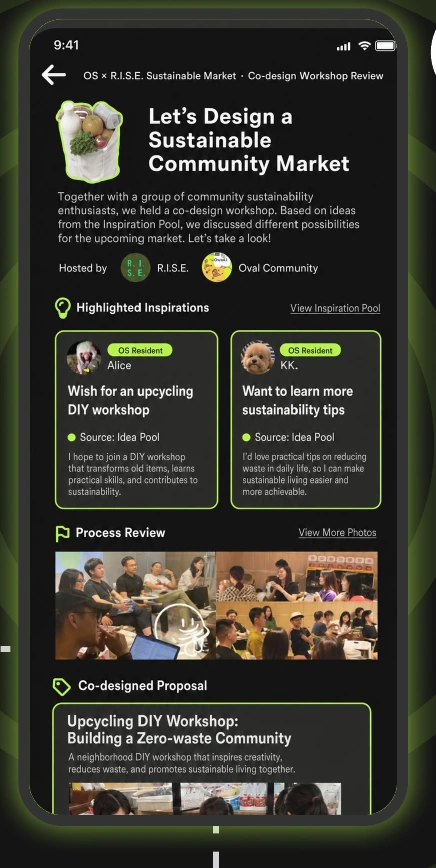
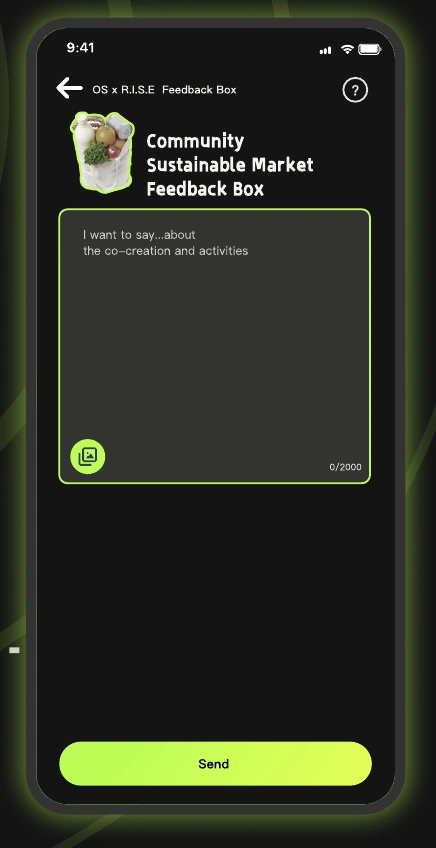
Feedback is more than a thank-you. Showing who contributed an idea and how it was discussed or adopted helps sustain a sense of participation.
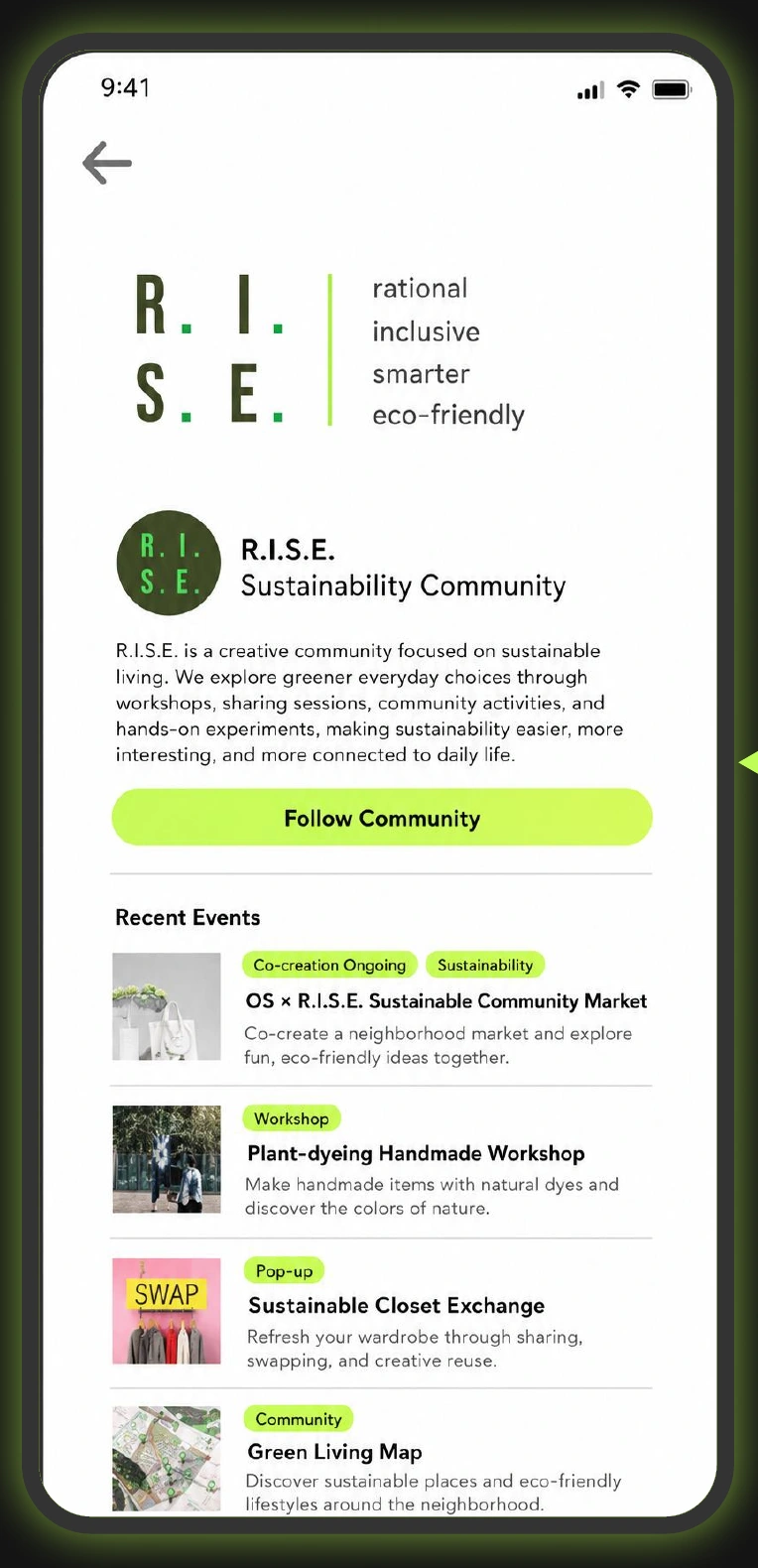
An event ends. The connections do not have to.
Creative groups have discoverable profiles that residents can follow, with their focus and upcoming activities. This supports an ongoing network of collaborators and a foundation for future co-creation.
FROM EVENTS TO RELATIONSHIPS
A partner is more than a name on a poster.
Profiles, activity records and follow actions help residents get to know a group beyond one collaboration.
ONLINE × OFFLINE
Bring the digital journey back into the neighborhood.
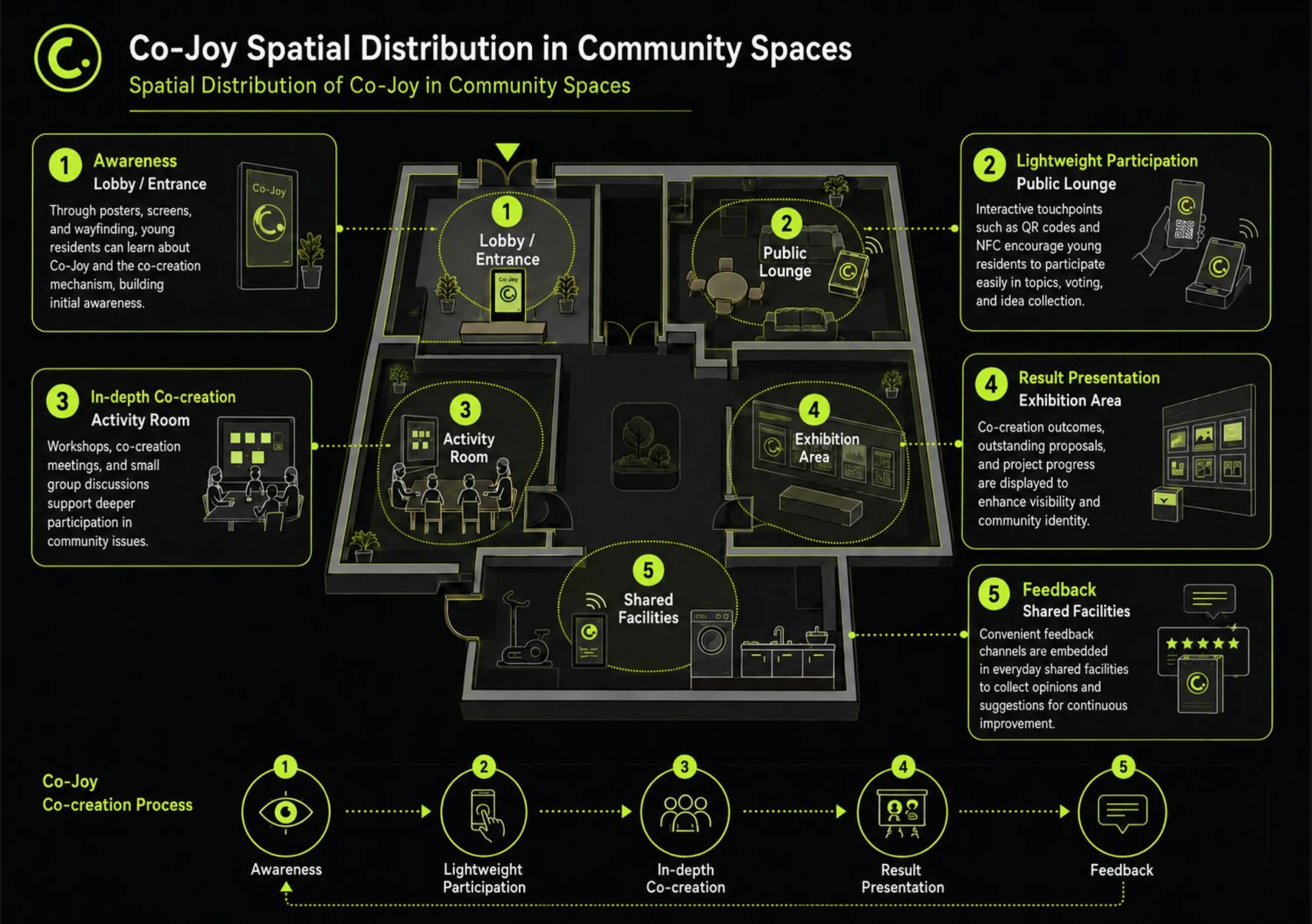
The entrance builds awareness, lounges support quick contributions, activity rooms host co-design, displays show outcomes, and shared facilities offer feedback opportunities. Each space plays a part in one continuous journey.
The spatial distribution is a design proposal, not a record of a built installation.
06TEST & ITERATE
Test the prototype—and be clear about what it cannot yet prove.
I developed a demo / prototype, gathered usability and expert feedback, and revised interactions and interfaces. This is prototype-stage validation, not evidence of growth in live operations.
- Usability-test participants
- 6 people
- System Usability Scale
- 73/100
- Industry-expert evaluation
- 3 experts
Source: thesis, Chapter 7. SUS is the rounded mean of six participants; this small sample does not establish long-term effectiveness.
REFLECTION
Service design is not only about making an interface usable. It is about understanding why people participate, how they collaborate, and what helps those relationships last.
The project is grounded in a single community and a limited sample. It tests aspects of interaction usability; sustained participation, operating effort and transfer to other communities still need a real-world pilot.