03 / CROSS-CULTURAL RESEARCH & SERVICE DESIGN
Bottega In
The Learning Neighborhood
Learn a language.
Become part of a neighborhood.
Turn local shops in Milan into learning settings, where newcomers practise Italian through real activities, exchange knowledge and build neighborhood relationships.
AT A GLANCE
- Challenge
- Language, information and social barriers limit newcomers’ participation in neighborhood life.
- My contribution
- Led learning-toolkit design and the service blueprint; contributed to team research and co-design.
- Deliverables
- A service proposal and tools that turn local shops into settings for language learning.
- Validation & results
- The team tested a restaurant-based prototype with 4 participants. Not commercially launched; long-term learning gains were not measured.
01CONTEXT
Belonging to a city takes more than learning its language.
Casoretto brings together shops, schools, a parish, community organizations and residents from different backgrounds. We explored how existing local resources could support intercultural inclusion.
The barrier extends beyond the classroom.
Familiar networks offer newcomers security, yet language, information and social barriers can make it difficult to move beyond them. Shopkeepers hold skills, spaces and local knowledge, but need a way to turn those resources into shared learning.
Could everyone in the neighborhood be both a learner and a contributor?
02FIELD RESEARCH
Start with unfamiliar shop doors, then understand the wider neighborhood.
Desk research and expert interviews framed the work. Repeated visits, observation and interviews with nearly 25 local participants grounded it in real needs, resources and relationships.
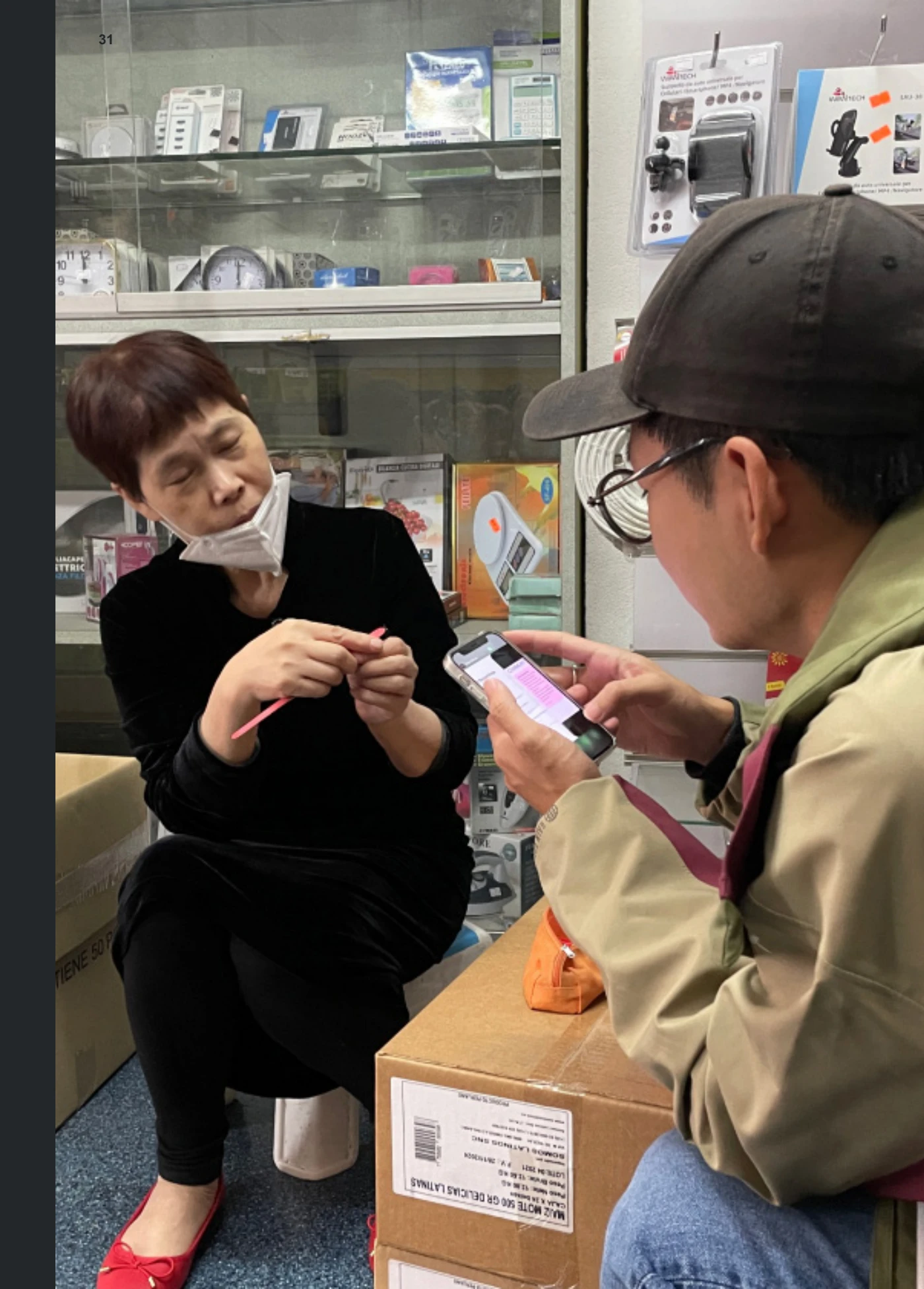
I did not speak Italian. The research still had to happen in person.
My challenge was initiating conversations in unfamiliar shops. With shopkeepers who did not necessarily speak fluent English, we used simple language, gestures, images and objects, adapting questions to their reactions.
Interviews were not one-off transactions. A shared matrix helped the team compare findings, revisit contacts and refine questions as trust developed.
Support can also become a boundary
Close networks support transition, but do not automatically create wider connections.
Everyday needs create connections
Education, children and everyday challenges offer shared starting points.
From receiving to contributing
Sharing knowledge and taking responsibility can build ownership and belonging.
Existing resources need connecting
Support grows through relationships among residents, shops and organizations.
03CO-DESIGN & REFRAMING
From an open activity network to a coordinated learning service.
Early ideas covered family activities, cultural exchange and a shopkeeper network. Co-design and simulations exposed the practical questions: who coordinates, how sessions fit business hours, and how learners keep up.
Help each participant define their part.
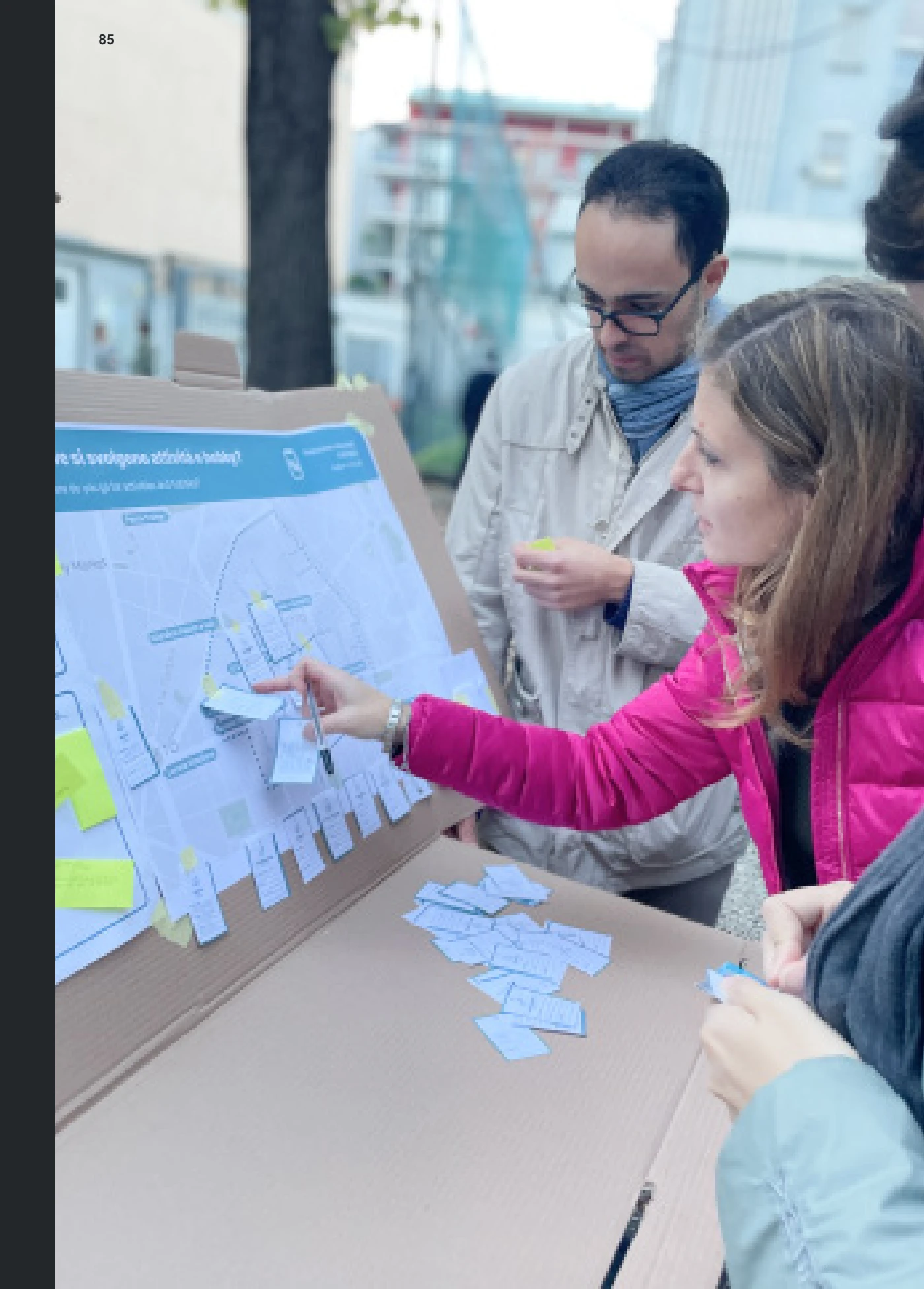
Activity cards and maps helped parents discuss their skills and interests. Future scenarios engaged children, while a future newspaper helped shopkeepers work backwards from a desired service to their own contributions and support needs.
Casoretto Academy
A network connecting residents, shops and creative resources.
Locus
A dedicated team coordinates activities and participant roles.
Bottega In
Focus on experiential Italian learning in real shops.
Shopkeepers have knowledge; that does not automatically make them teachers. Educators, coordination and tangible learning tools need to support the experience.
04LEARNING TOOLKIT · MY DESIGN FOCUS
Make a shopkeeper’s knowledge accessible through a designed learning experience.
The toolkit connects lesson planning, the live experience and reflection. It helps educators plan with shopkeepers, and helps learners turn an activity into language they can retain and use.
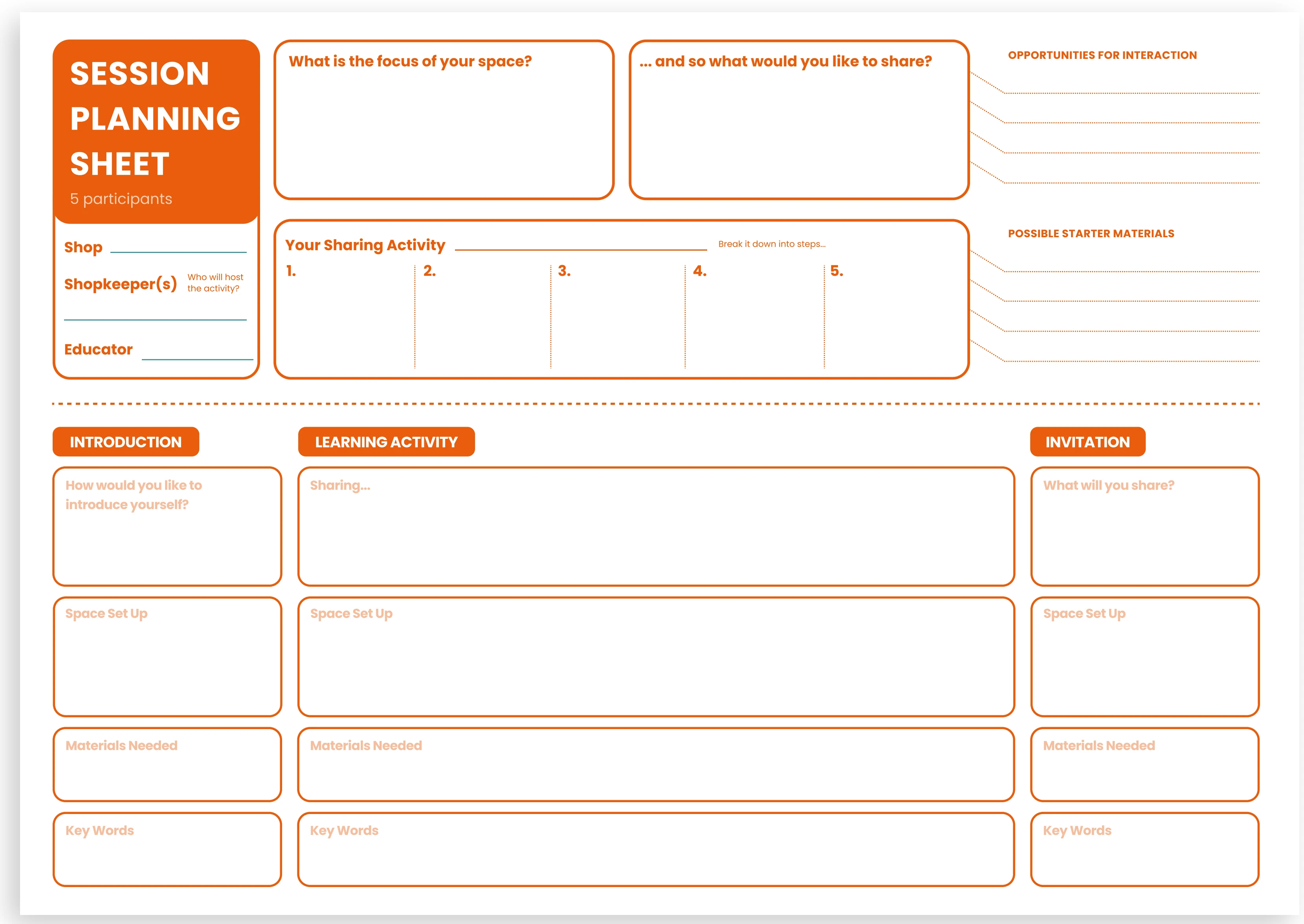
BEFORE / PLAN TOGETHER
Discover resources, not just fill in a prescribed sequence.
The canvas aligns themes, available resources, tasks, key vocabulary and roles. Feedback moved it beyond a fixed sequence towards a tool for exploring resources, collaboration and creative possibilities.
The key words selected here become the vocabulary cards used during the session.
DURING / EXPERIENCE & RECORD
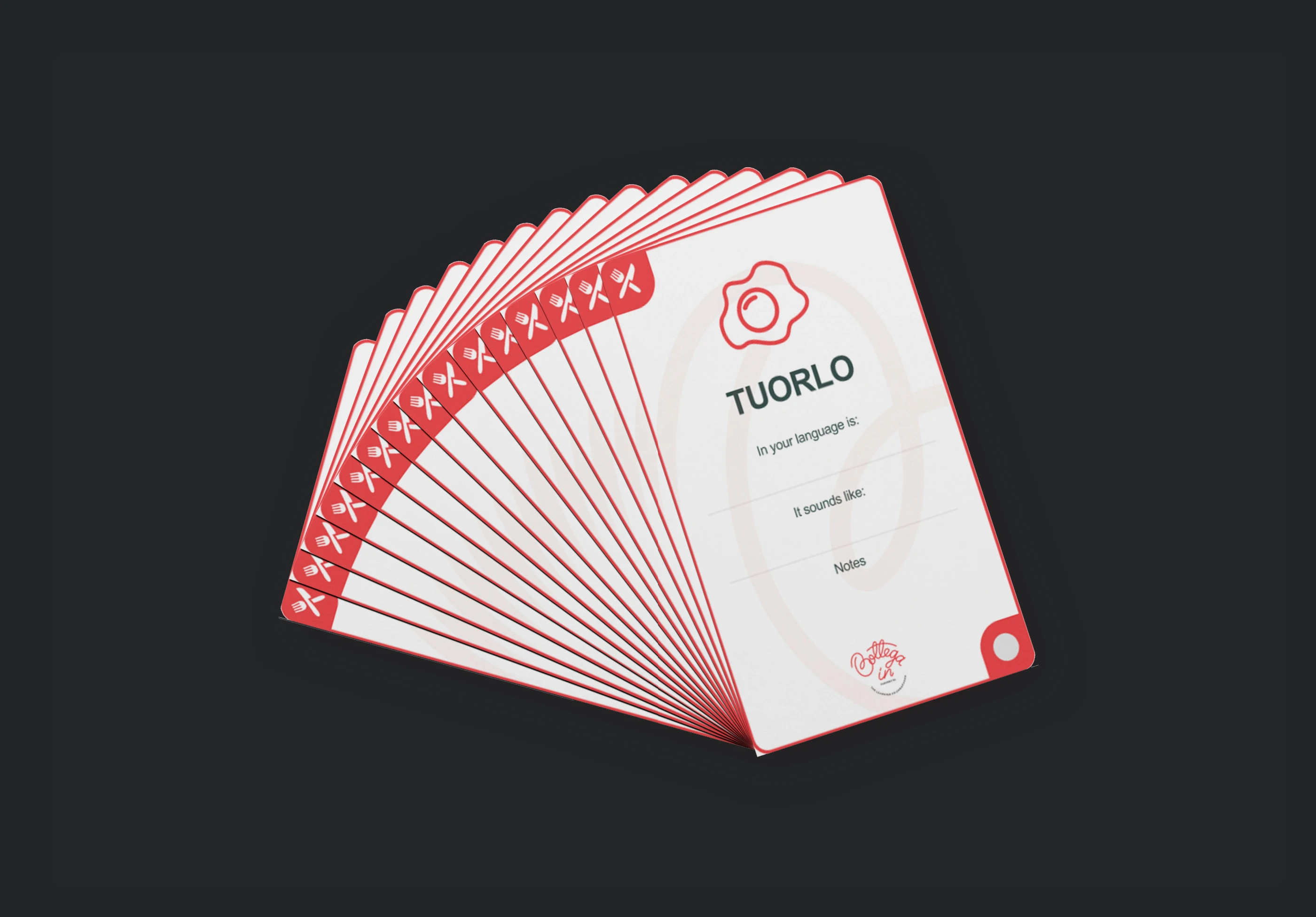
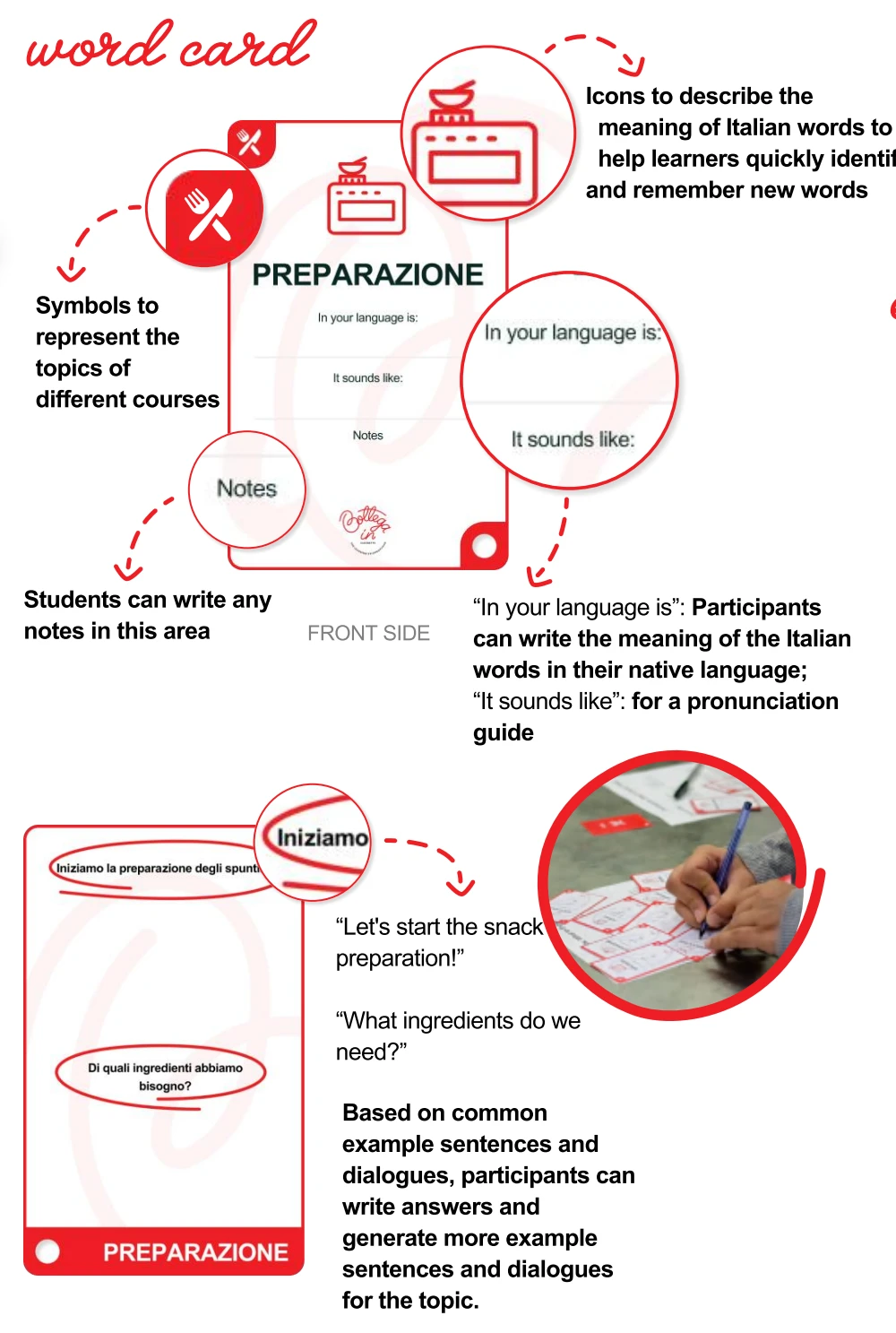
A vocabulary card that leaves room for different languages.
Icons support recognition; native-language meanings and pronunciation associations support recall. Notes and blank cards let learners record their own understanding and new words encountered during the activity.
AFTER / TURN EXPERIENCE INTO LEARNING
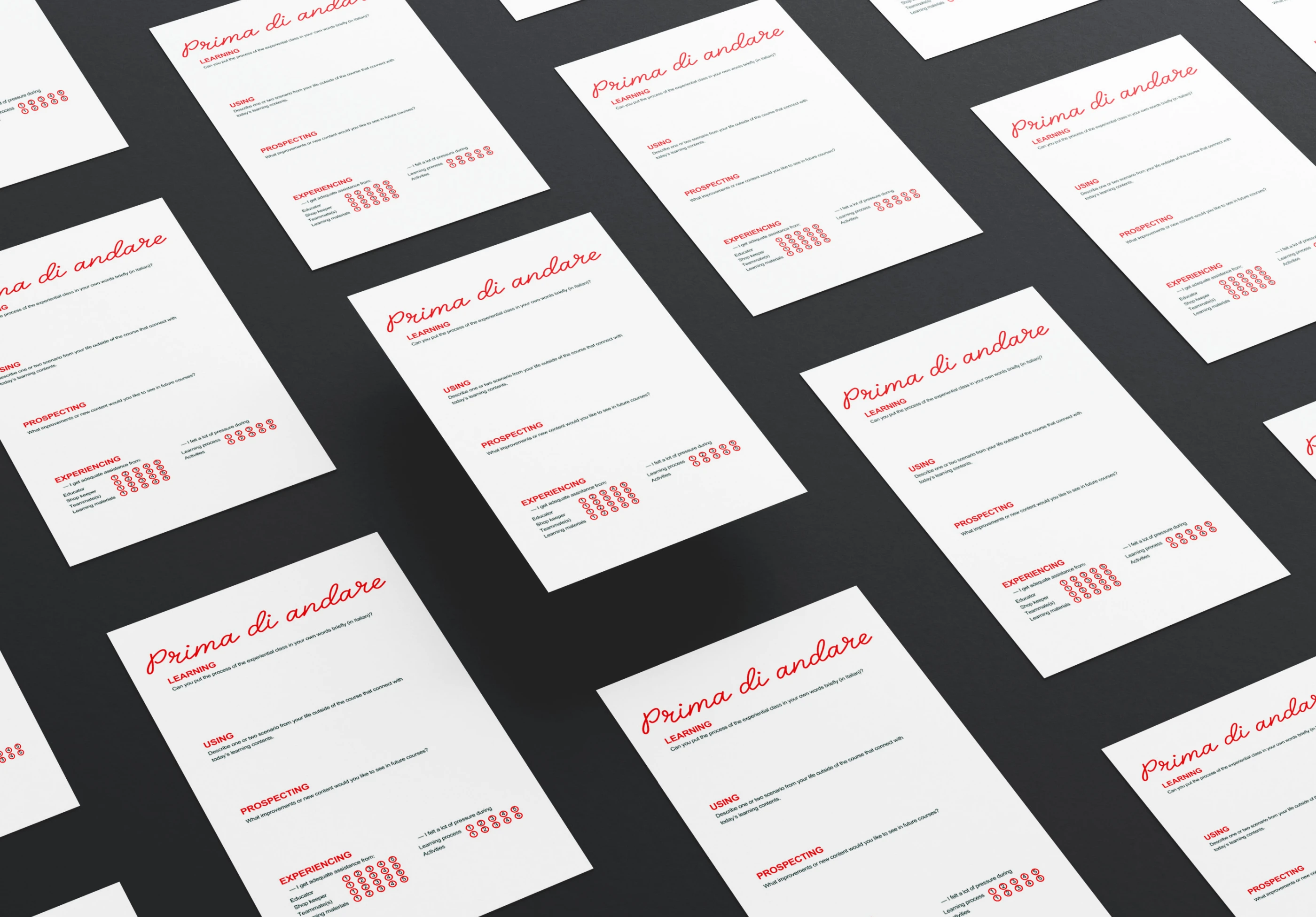
The activity ends; the learning continues.
The exit ticket asks learners what they learned, where they could use it and how the session might improve. It supports reflection and gives educators input for the next iteration.
05FIELD PROTOTYPE
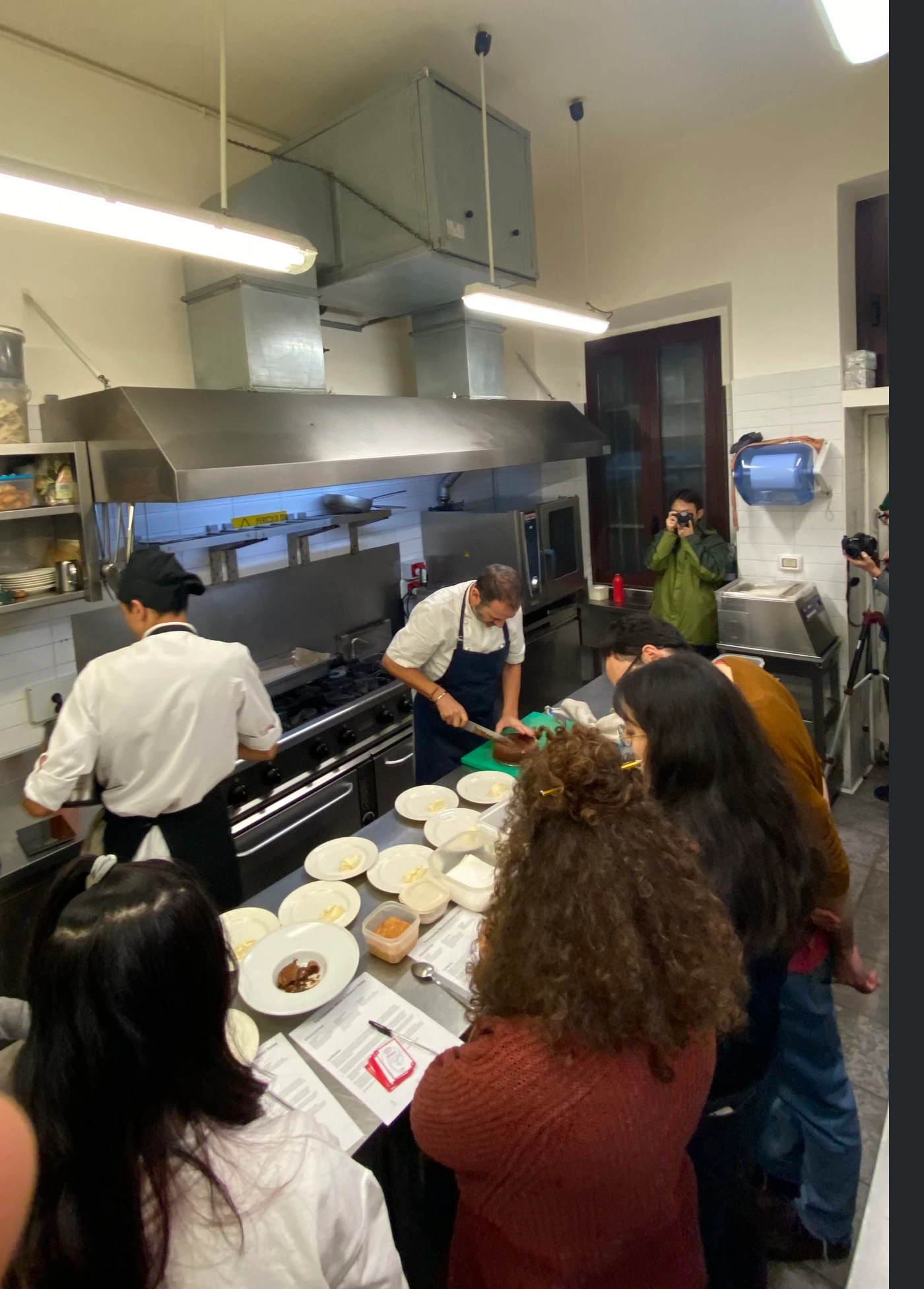
A real restaurant reveals what a paper plan cannot.
We ran a restaurant-based simulation with four participants, covering onboarding, cooking, vocabulary support and reflection to test the connected service journey.
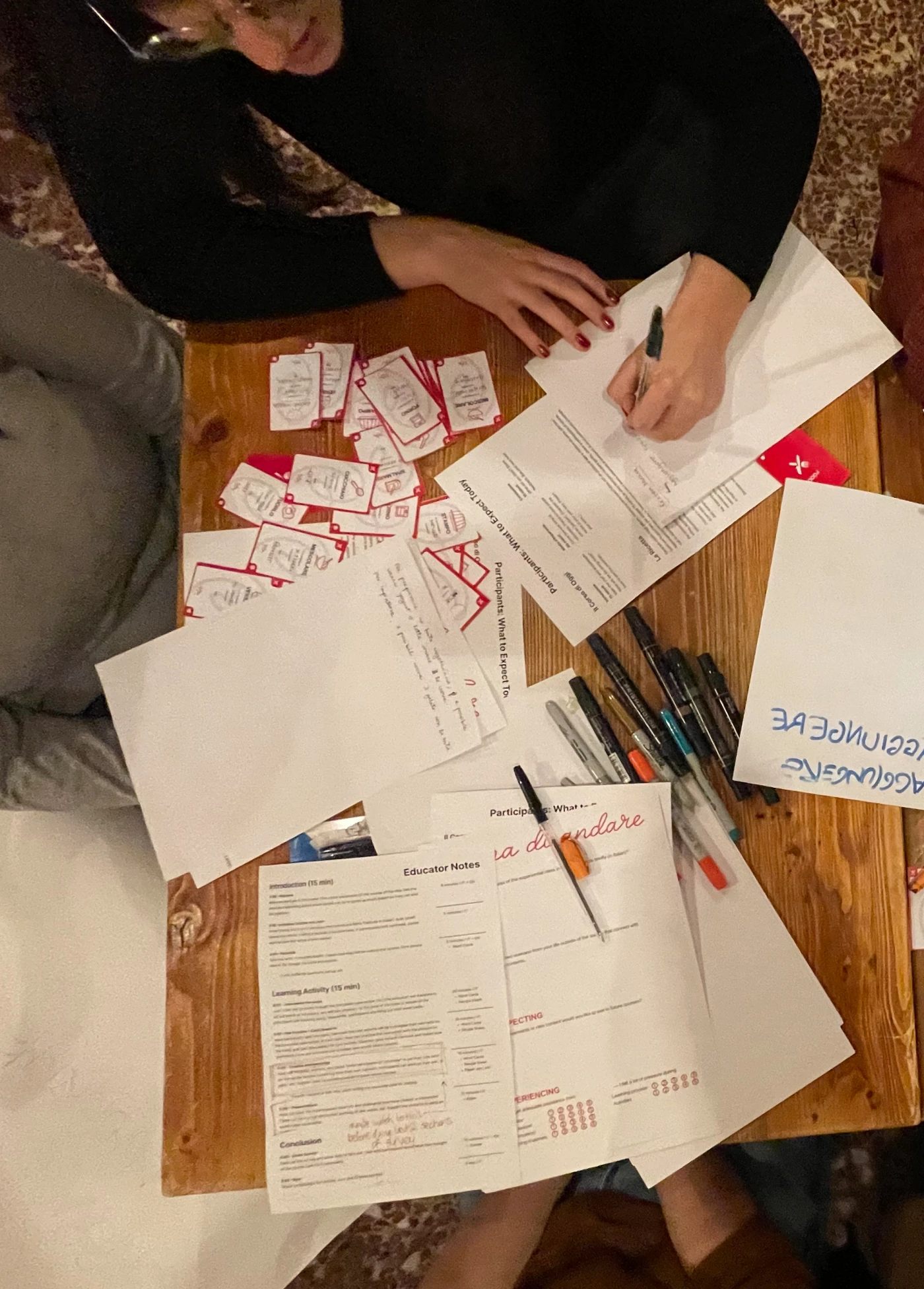
A shared language helped, but different Italian levels affected interaction.
Assess language levels before grouping, and add an introduction and icebreaker.
The chef’s working pace was faster than learners could process.
Add educator-led pauses and explanations, plus facilitation training for shopkeepers.
Participants asked few questions during the activity.
Provide basic questions and conversational prompts to make speaking easier.
Reflection led to peer translation, sharing and collaborative recipe rewriting.
Give reflection equal weight to the activity, and retain a consistent cohort and educator.
This was a small service prototype, not a commercial launch or a measurement of long-term language or inclusion outcomes.
06SERVICE SYSTEM
A coherent customer experience needs coordinated work behind it.
The proposal connects learners, shopkeepers, educators, operators and existing language courses. Each brings different resources and needs a clear reason to participate.
Language + relationships
Practise in context while discovering people and resources nearby.
Knowledge + local connections
Share expertise and let more residents discover the business and its people.
Coordination + learning support
Connect planning, resource matching, teaching and feedback.
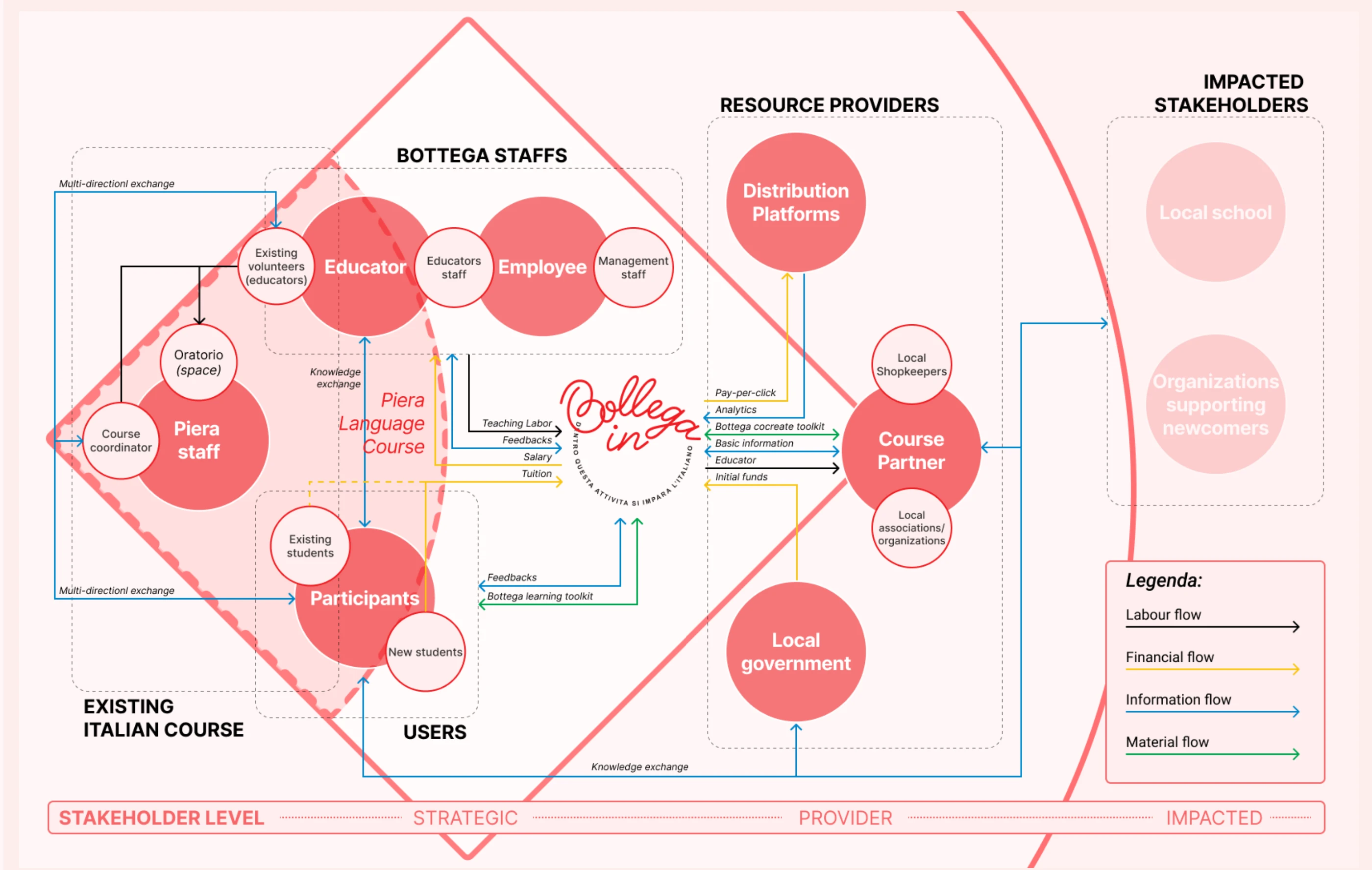
MY WORK / SERVICE BLUEPRINT
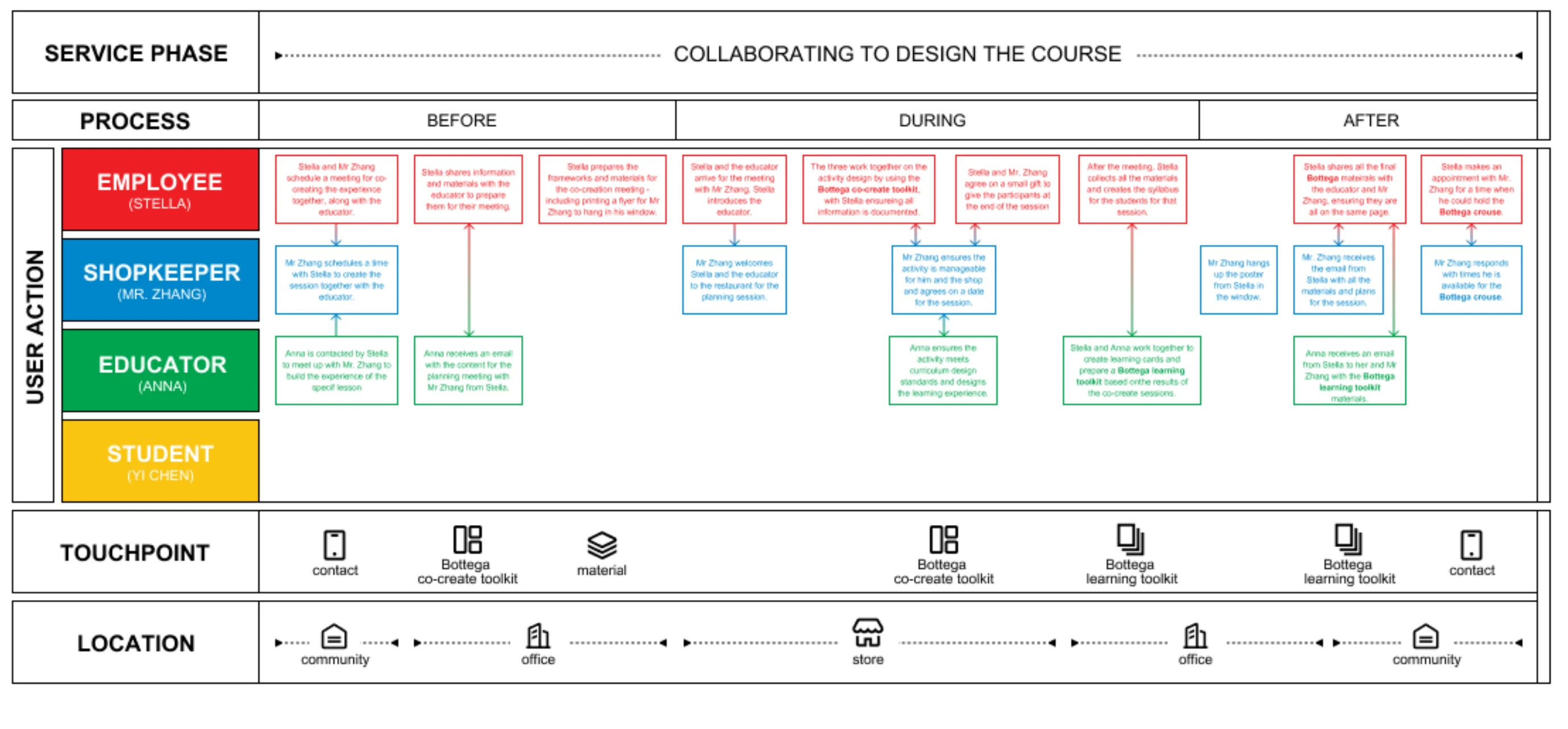
Align roles, processes, touchpoints and locations.
I used the blueprint to align participant actions and backstage responsibilities, then worked with the UI designers to connect digital flows to planning, onboarding, participation and follow-up.
07FINAL TOUCHPOINTS
From first discovery to a lesson—and back into everyday life.
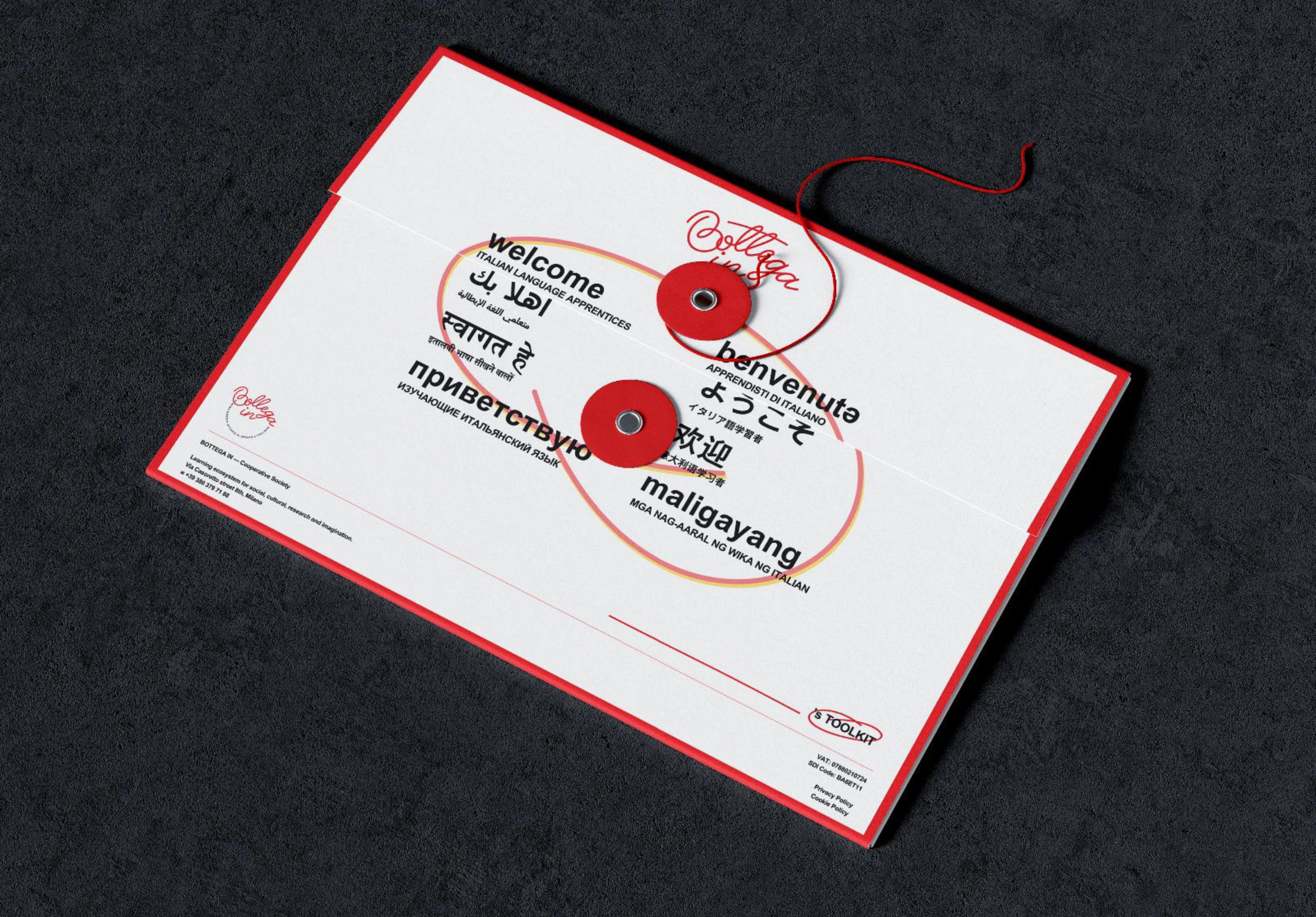
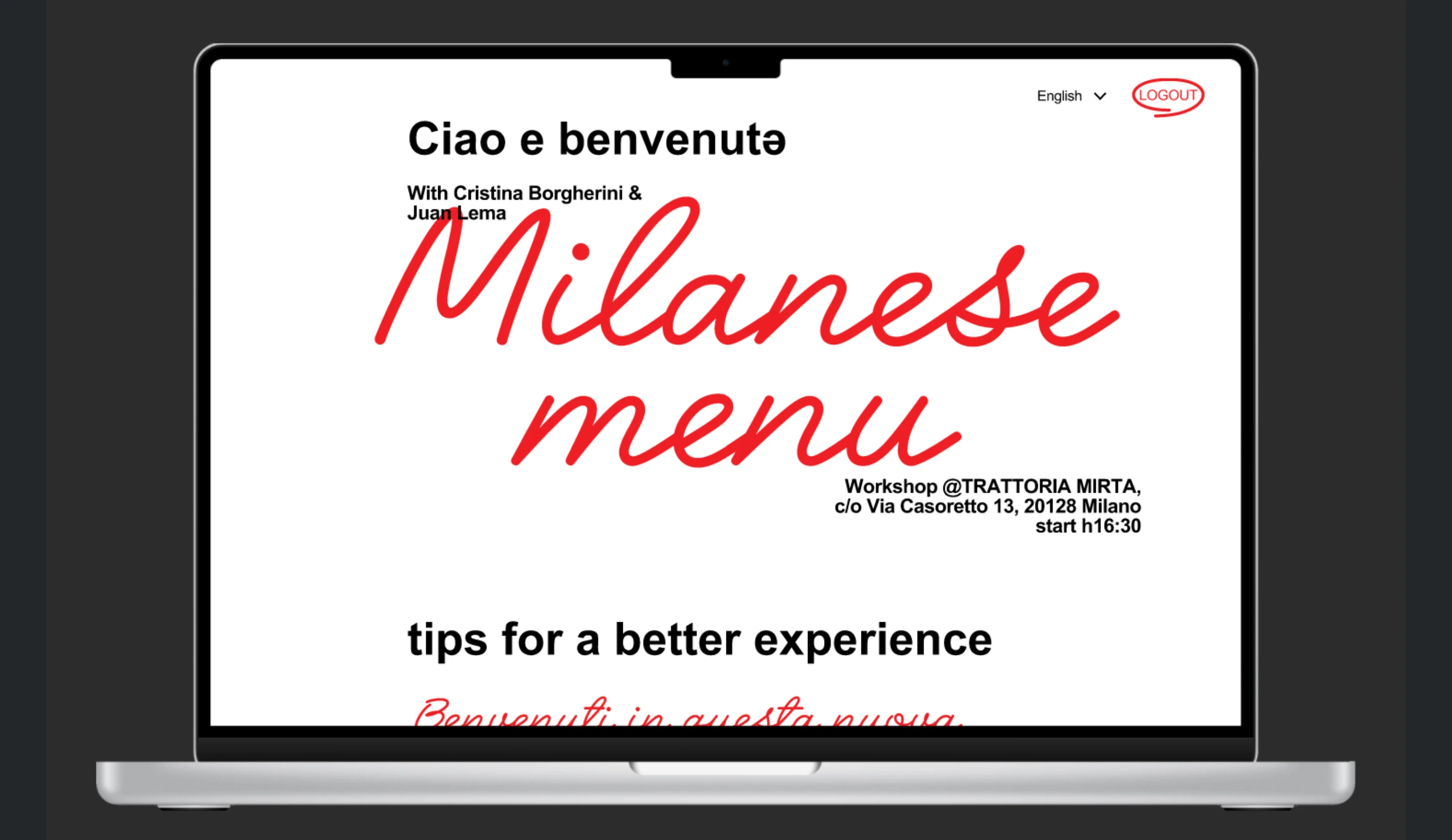
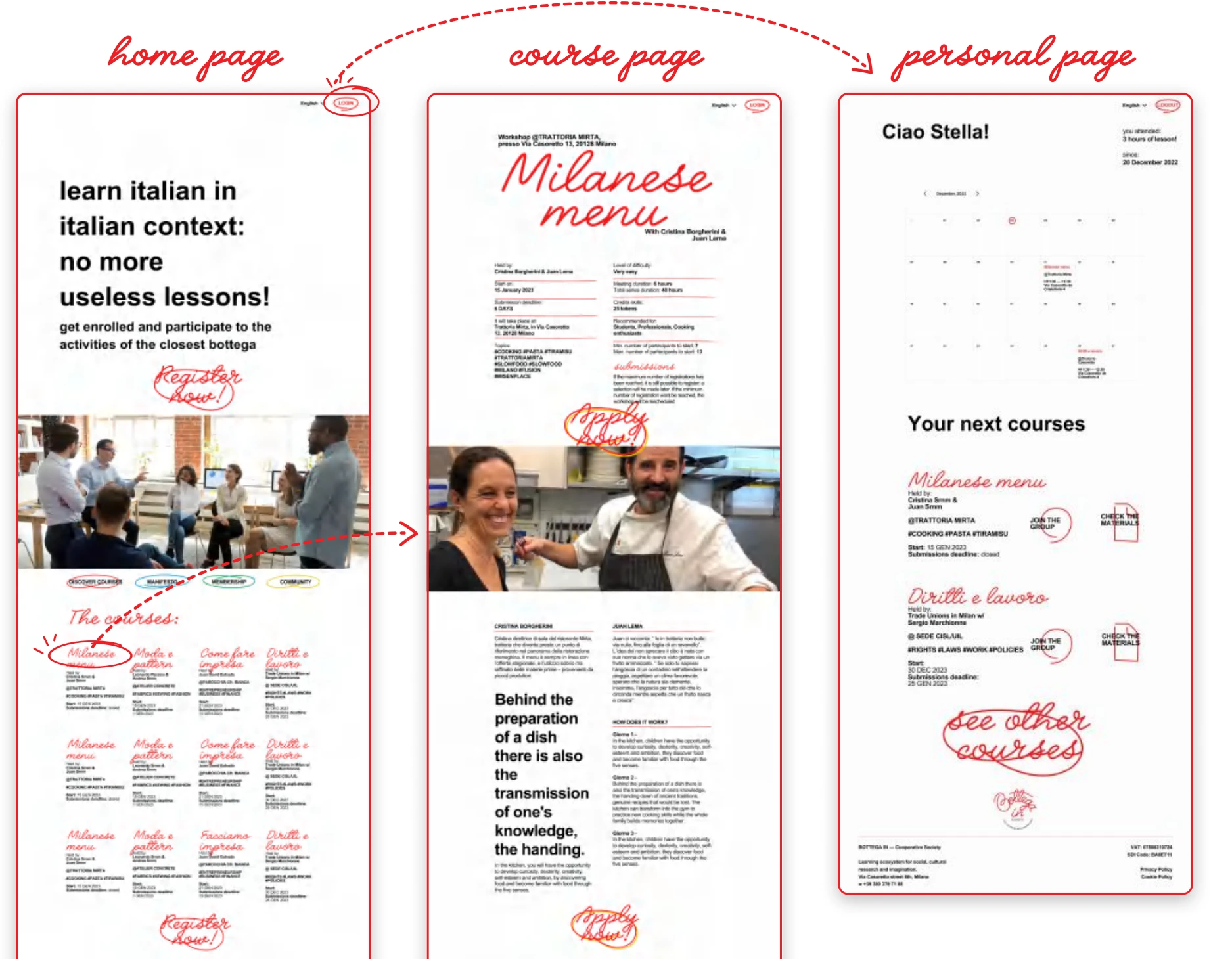
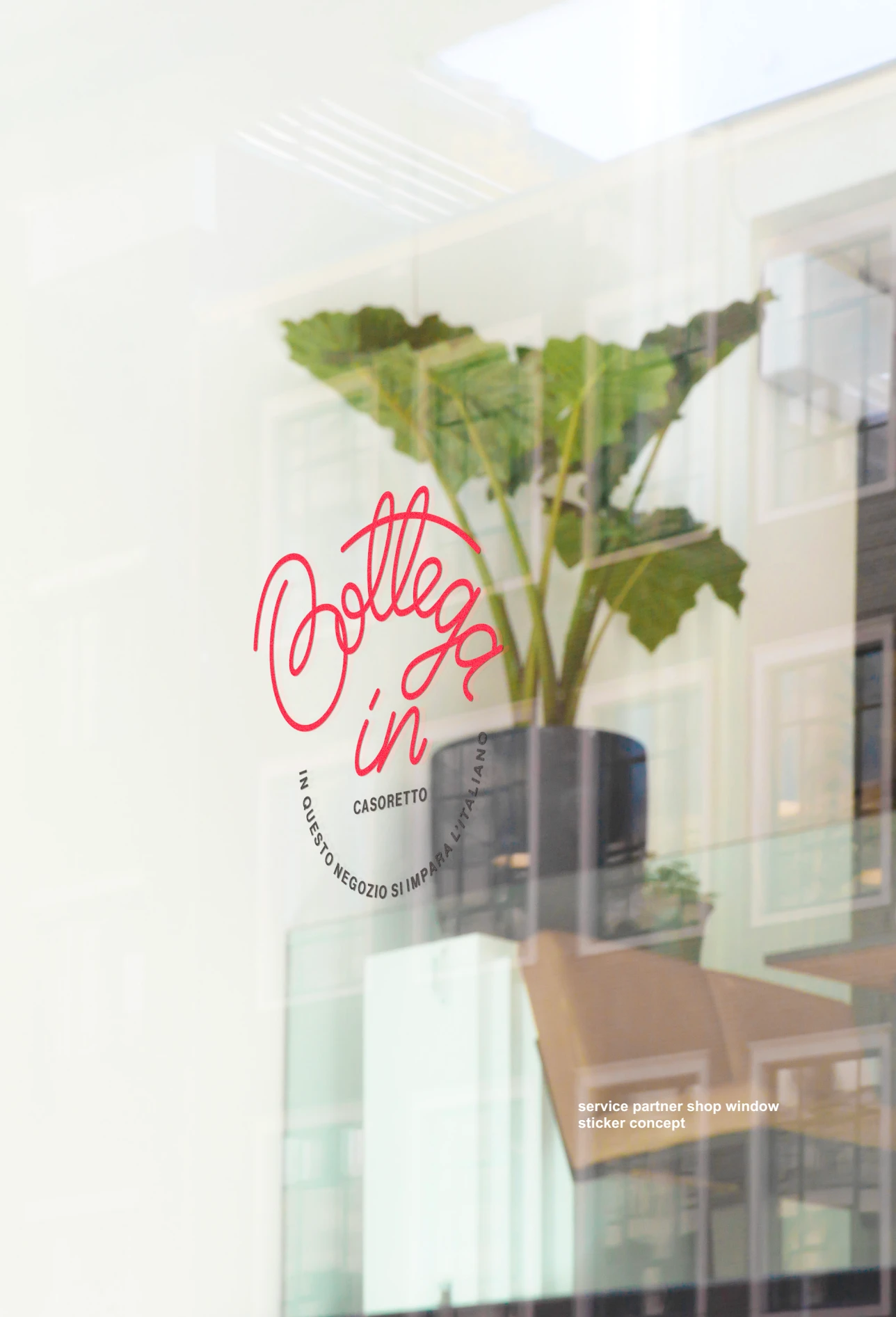
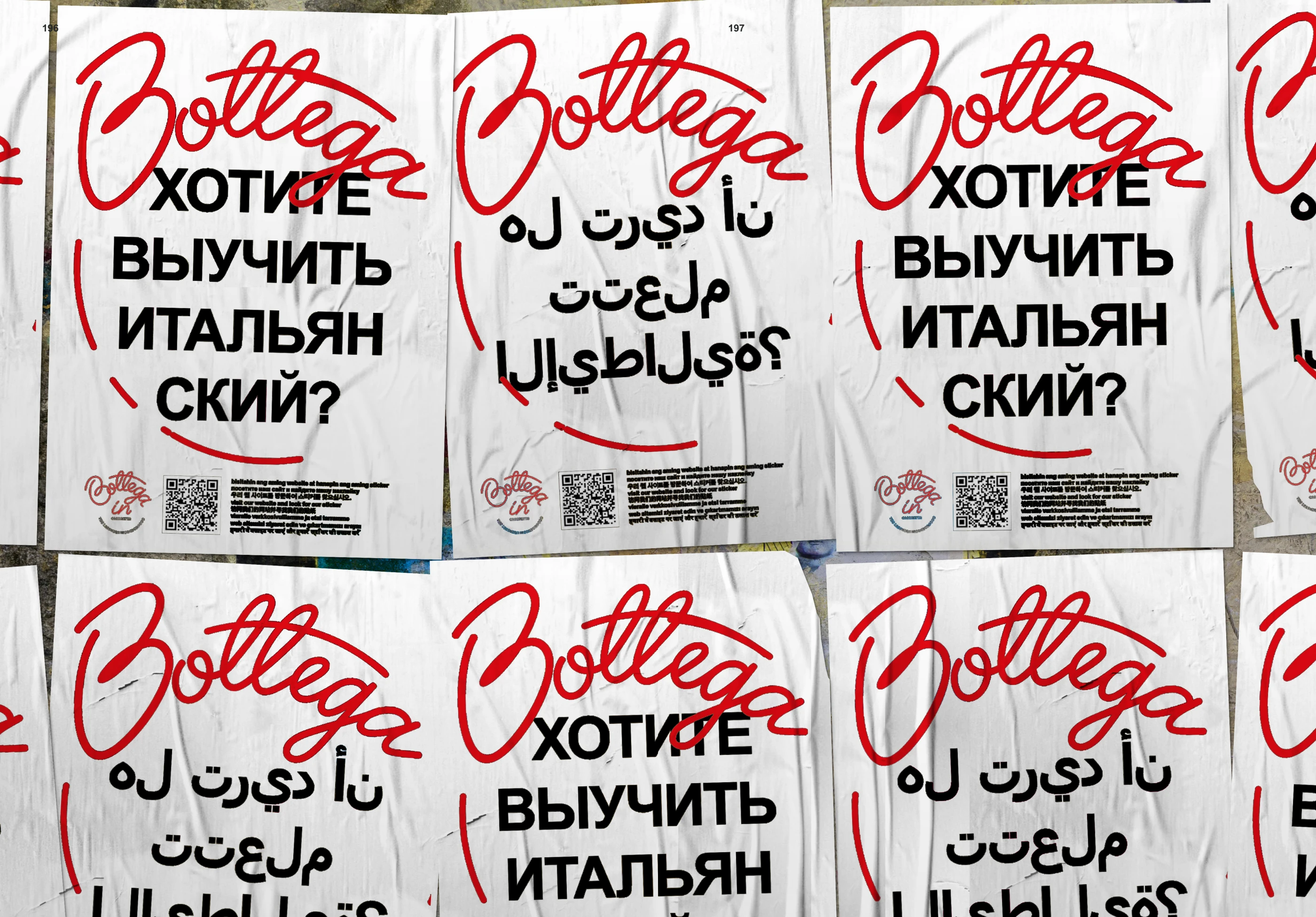
The team translated the service into a brand, digital platform, shop signage and neighborhood communication. Multilingual expression supports a welcoming local identity; digital touchpoints clarify participation.
DIGITAL EXPERIENCE
Learners and shopkeepers need different entry points.
Learners need course details, schedules, language information and preparation. Shopkeepers need calendars, training and partnership information. I aligned these needs with the UI teammates through the service blueprint.
REFLECTION
Cross-cultural design is not moving the same answer from place to place.
This project connected research, trust-building, tool design and field implementation. It made me more attentive to cultural context, practical constraints and existing resources. A next step would be to test which principles travel and which touchpoints need redesign for another language and place.
Sources: the project book BOOK WIP 20221219_2303 and my portfolio. Original English and Italian remain in the visuals. Brand, interface and communication mockups depict the design proposal.